
-
Moving forward since 1956
To understand our future, we must look at the milestones that redefined our way of creating value. This section offers a look at the evolution of our core pillars, through short videos dedicated to our methodologies, our industrial footprint, and our visual identity. Witness how manual craftsmanship transformed into digital intelligence, how local shops became global smart factories, and how our logo evolved to represent a world in motion. Discover the technical and creative soul of Bonfiglioli through seventy years of continuous improvement.
-
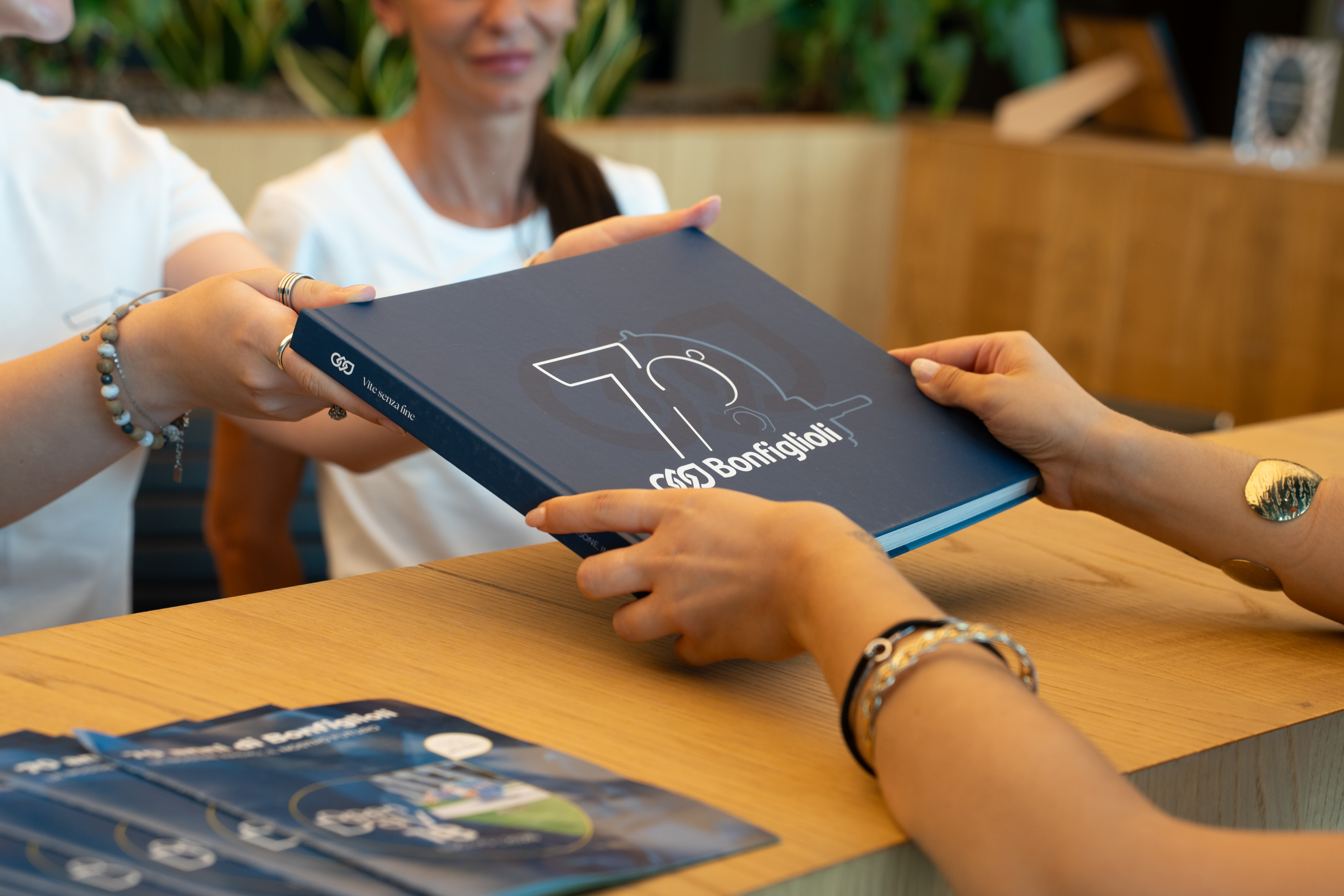
Vite senza fine
Dreams, People, Innovation
Born from shared memories
The meaning behind the title: Vite Senza Fine
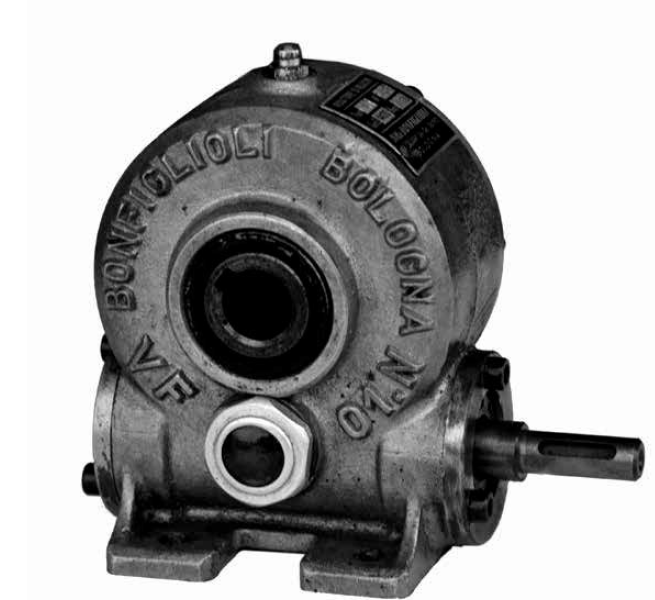 Share your chapter in our history
 -
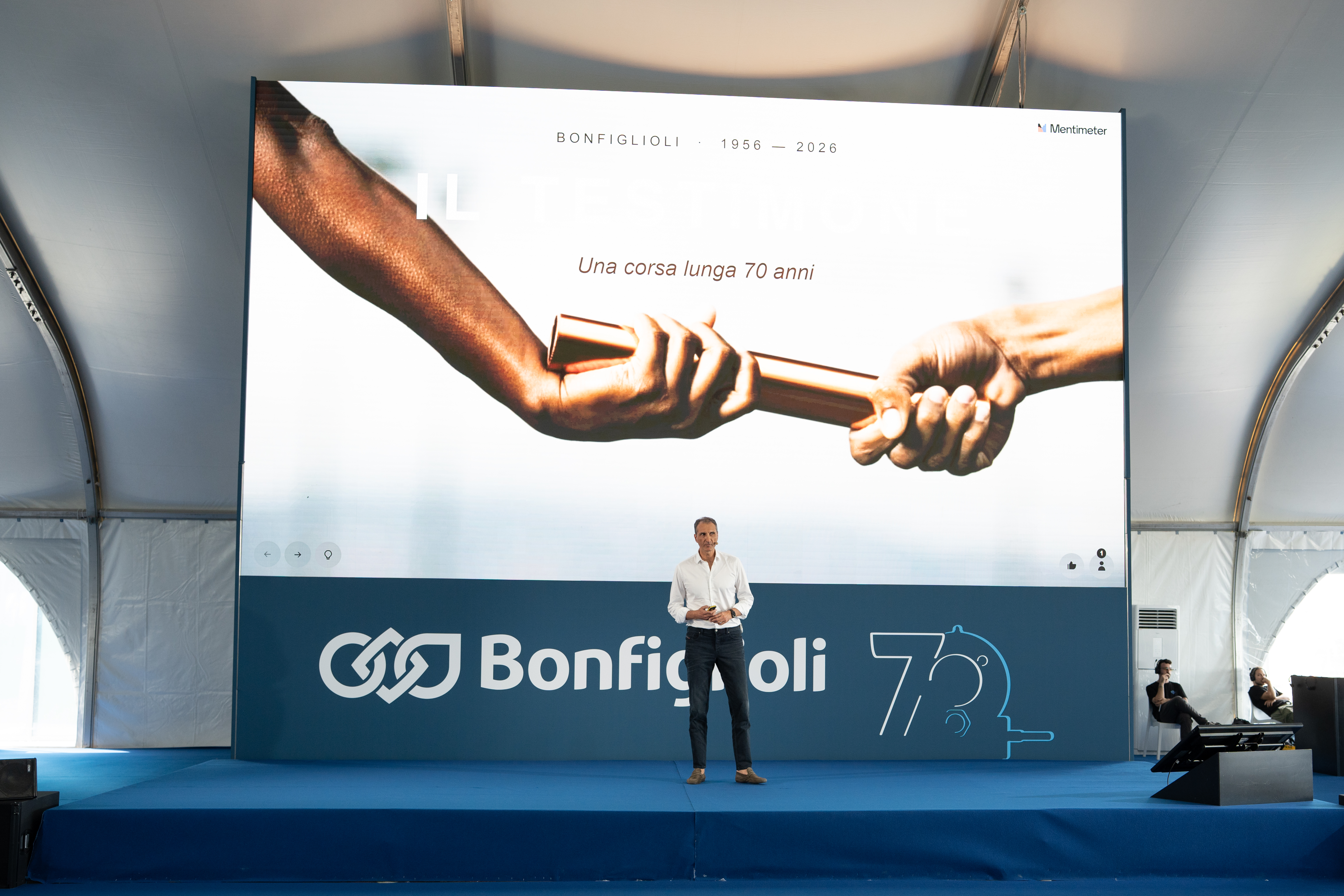
Plenary highlights
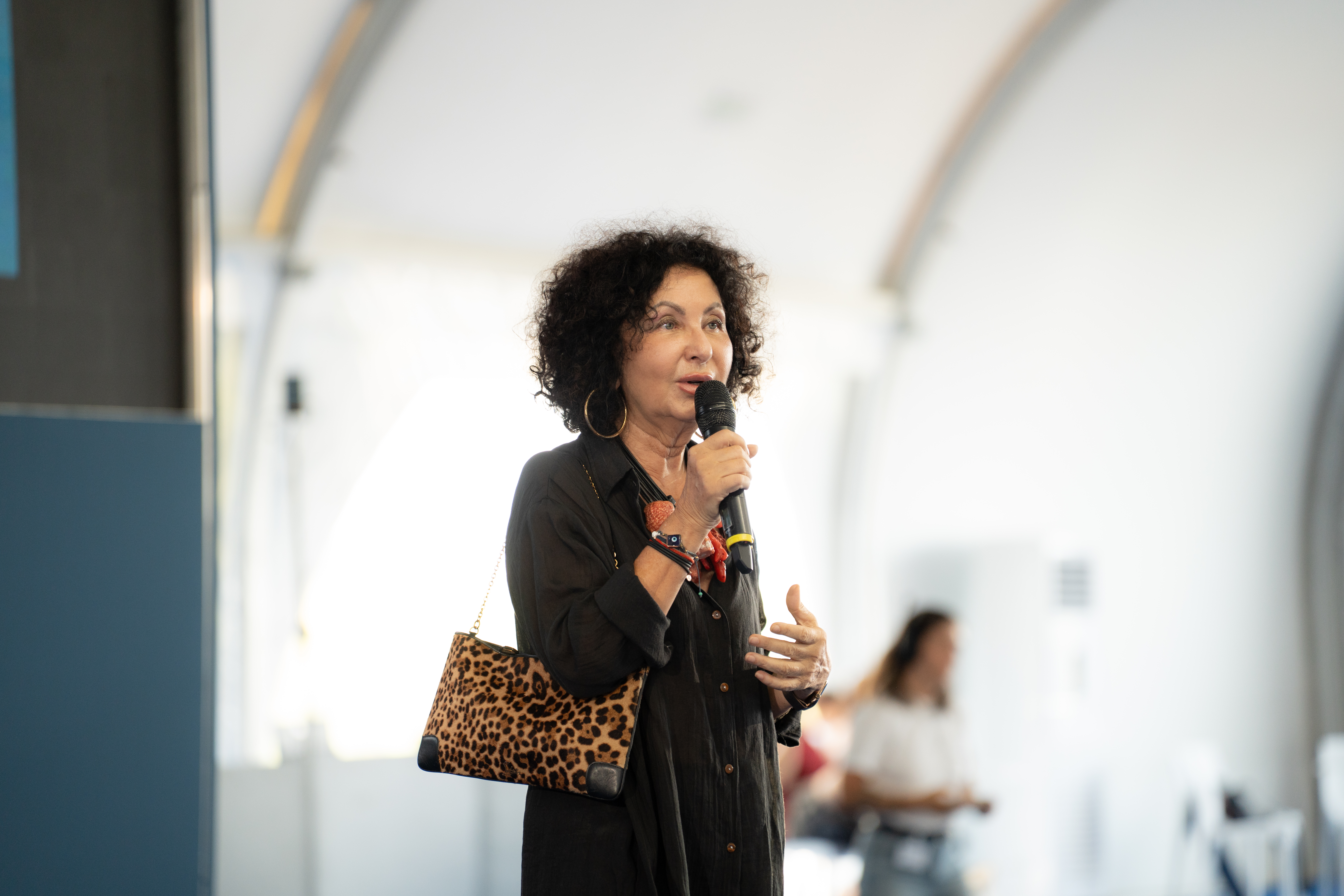
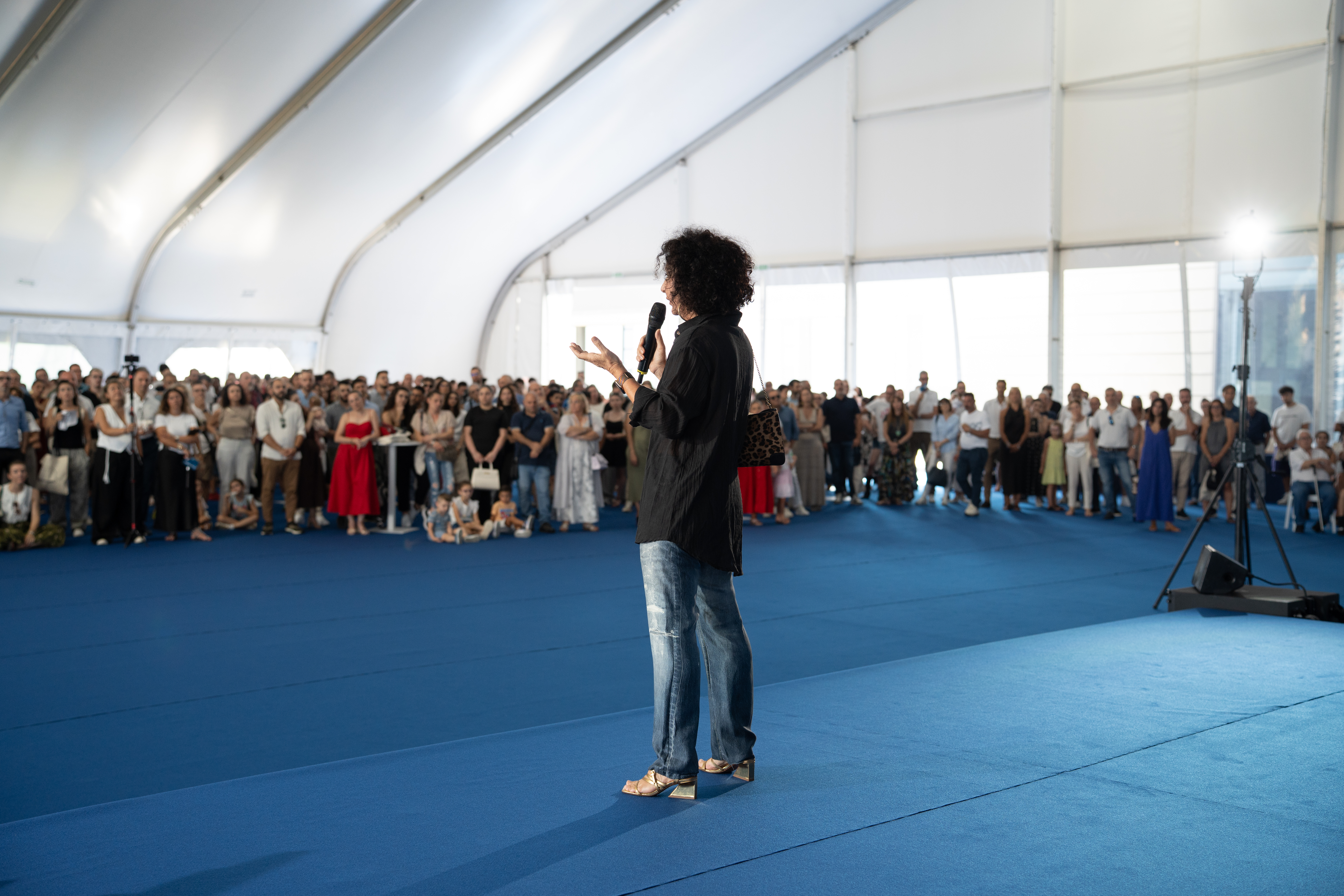
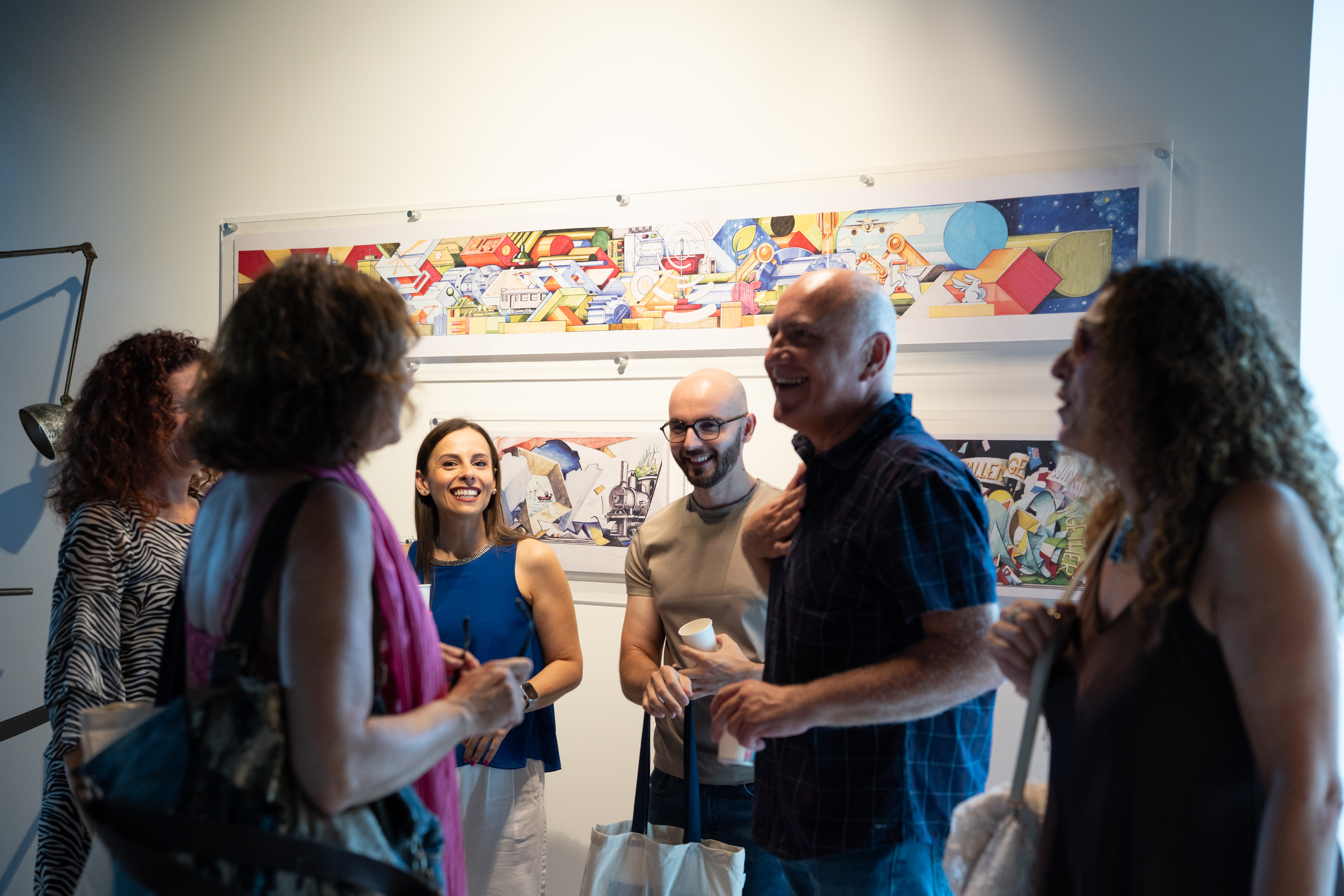
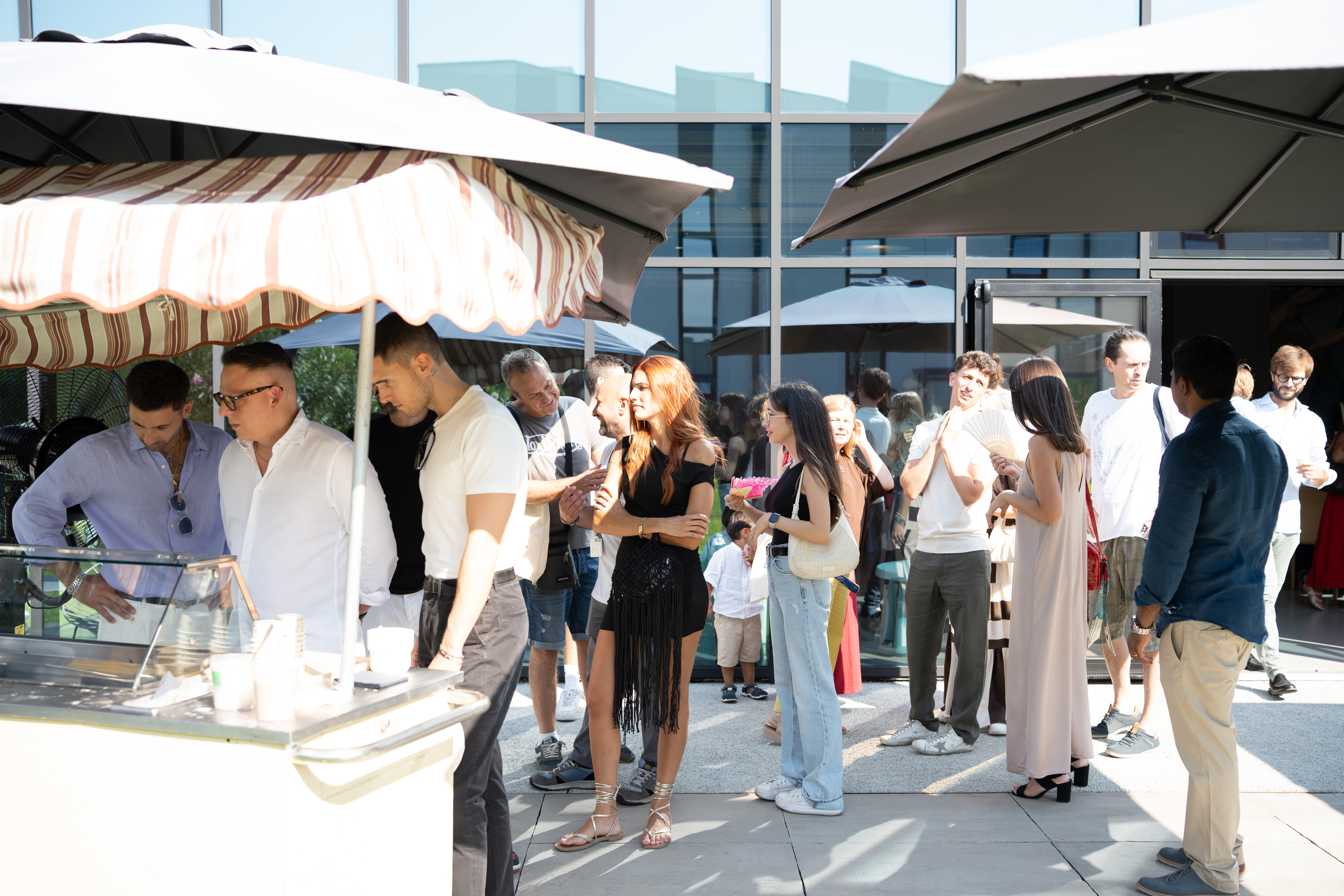
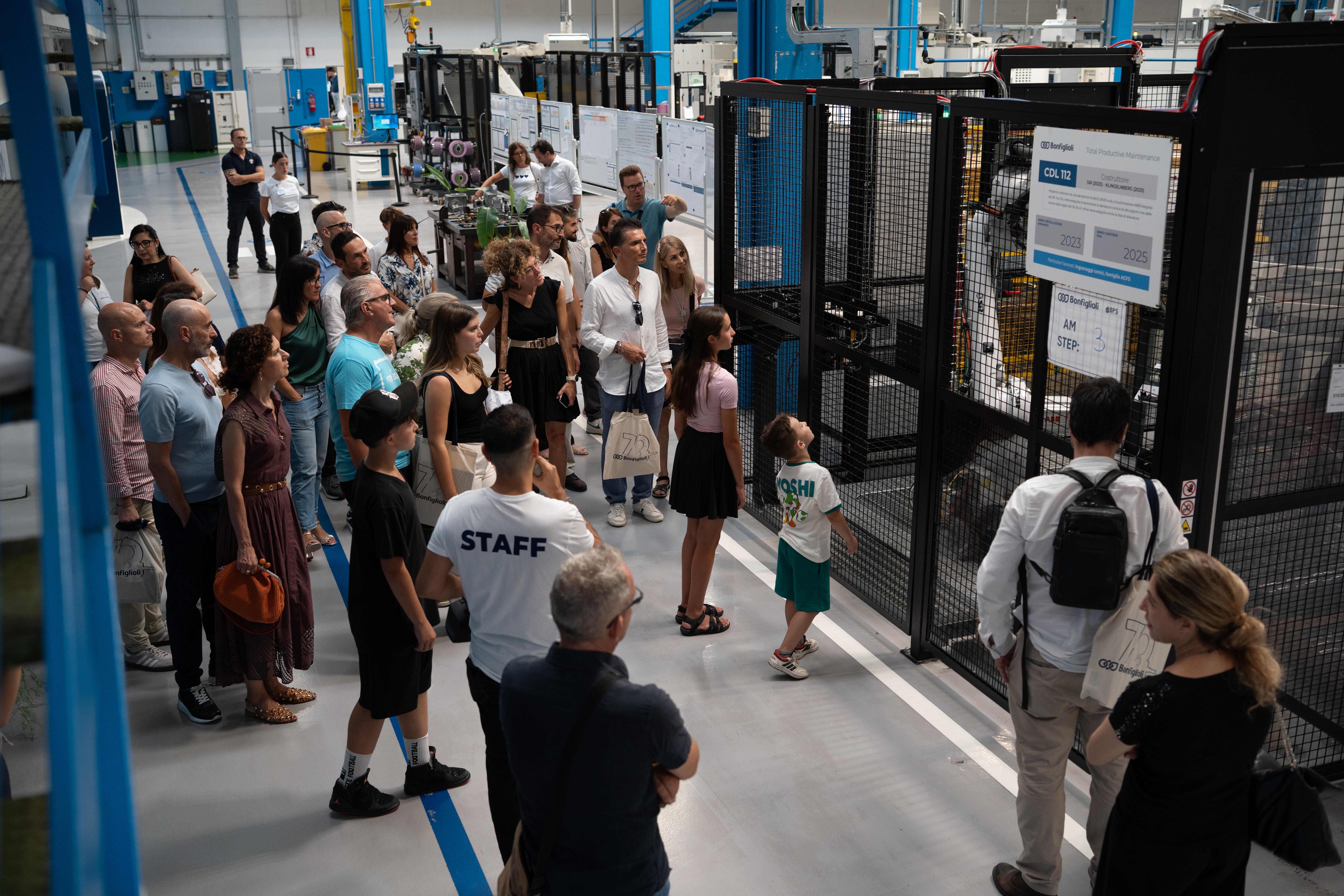
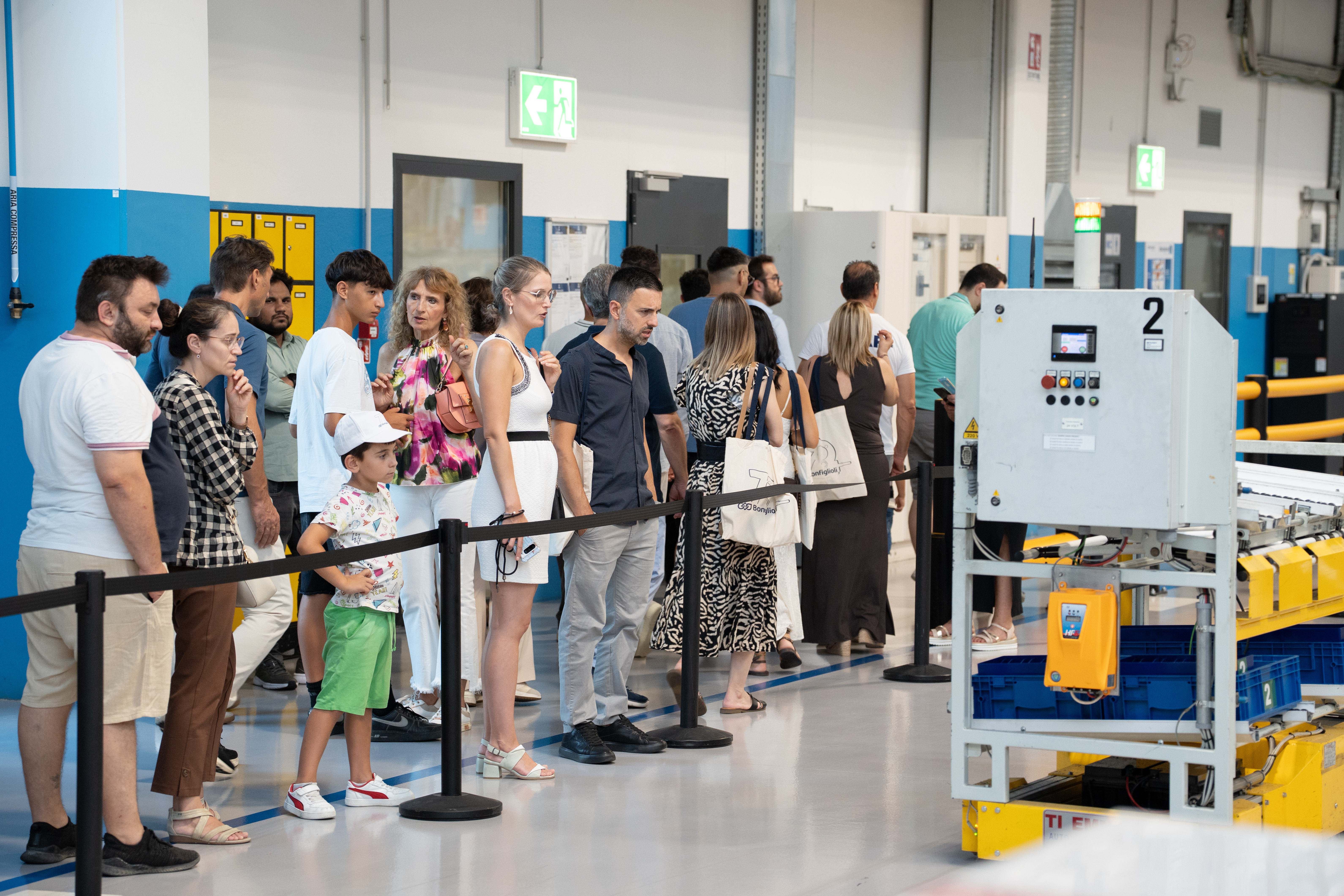
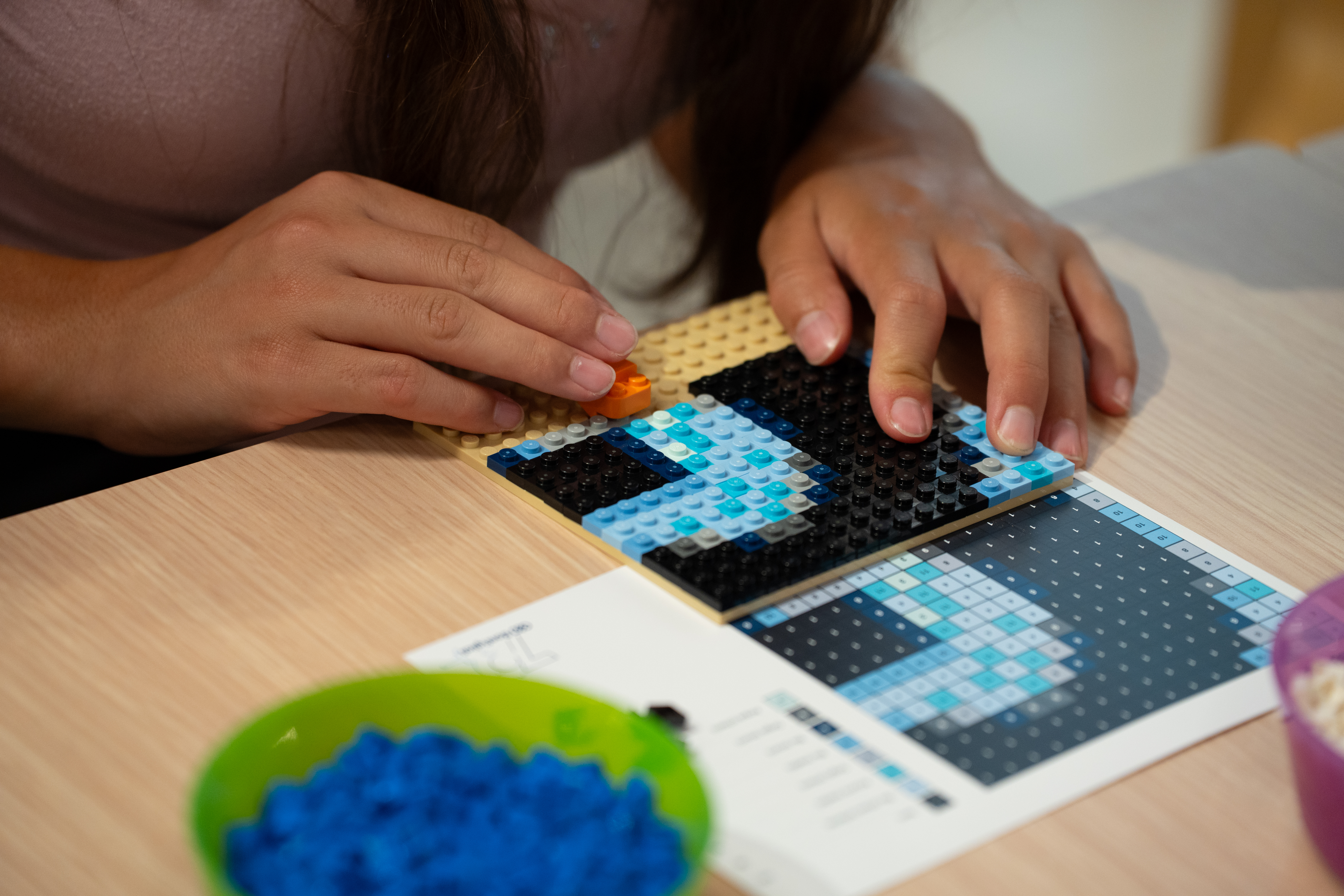
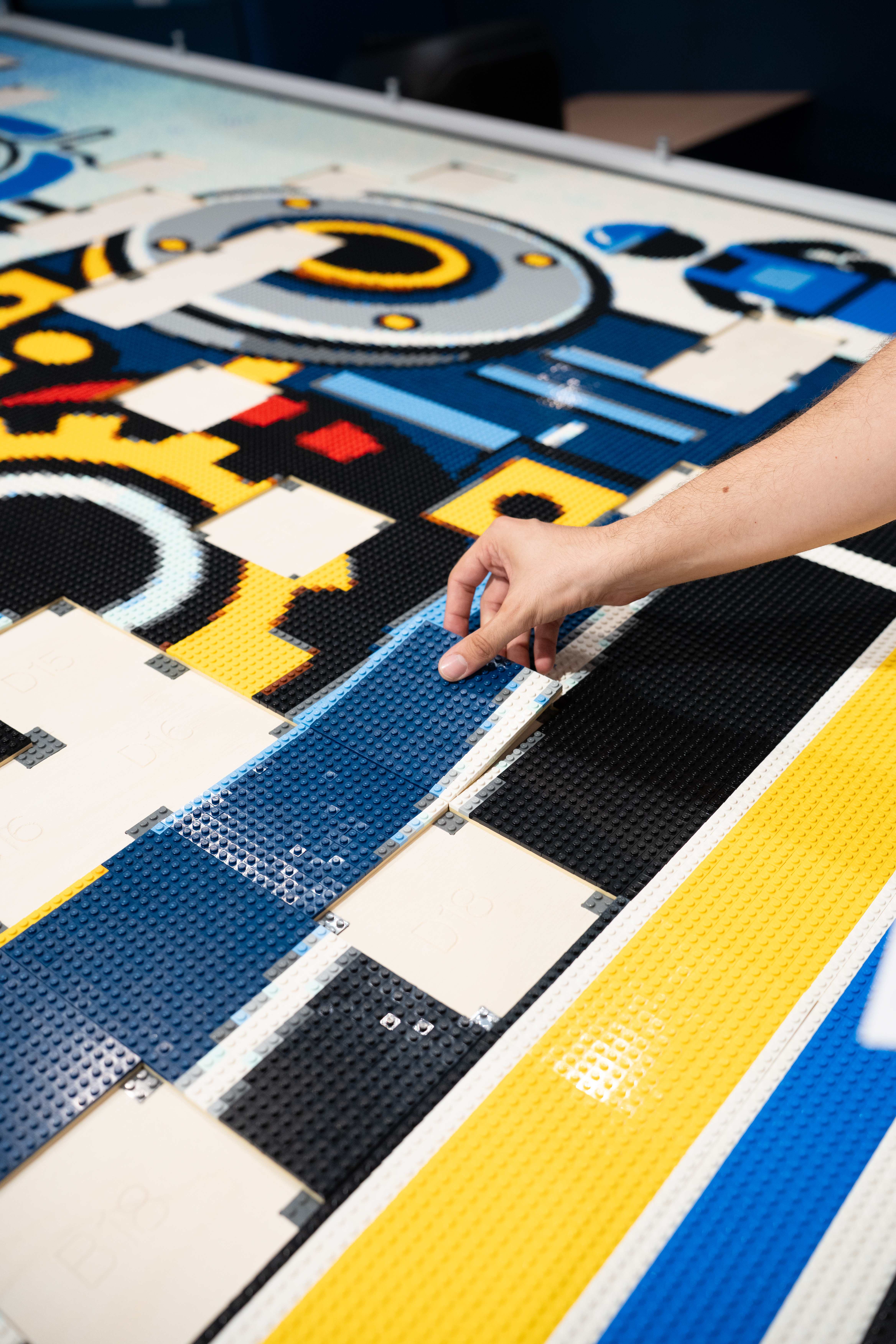
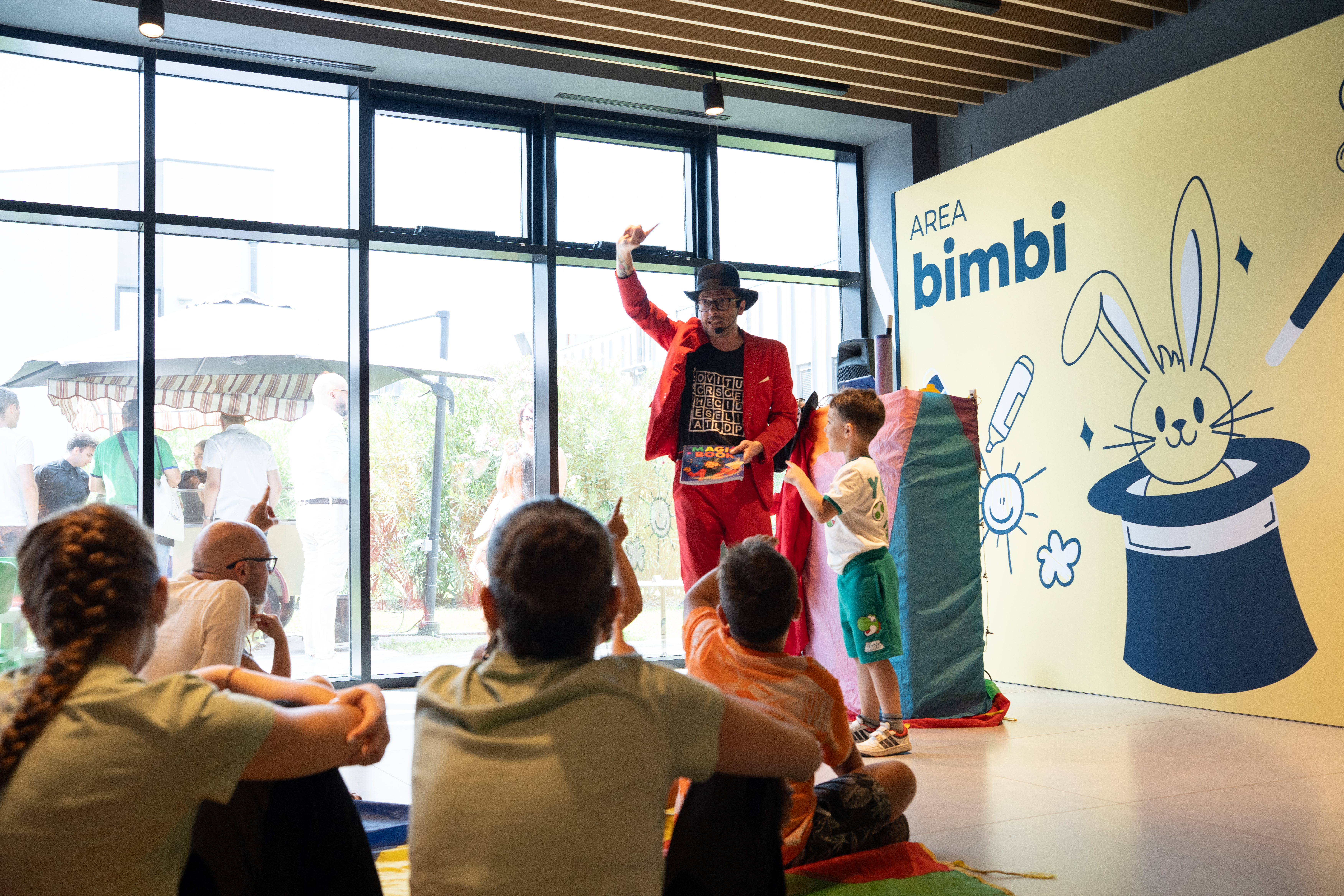
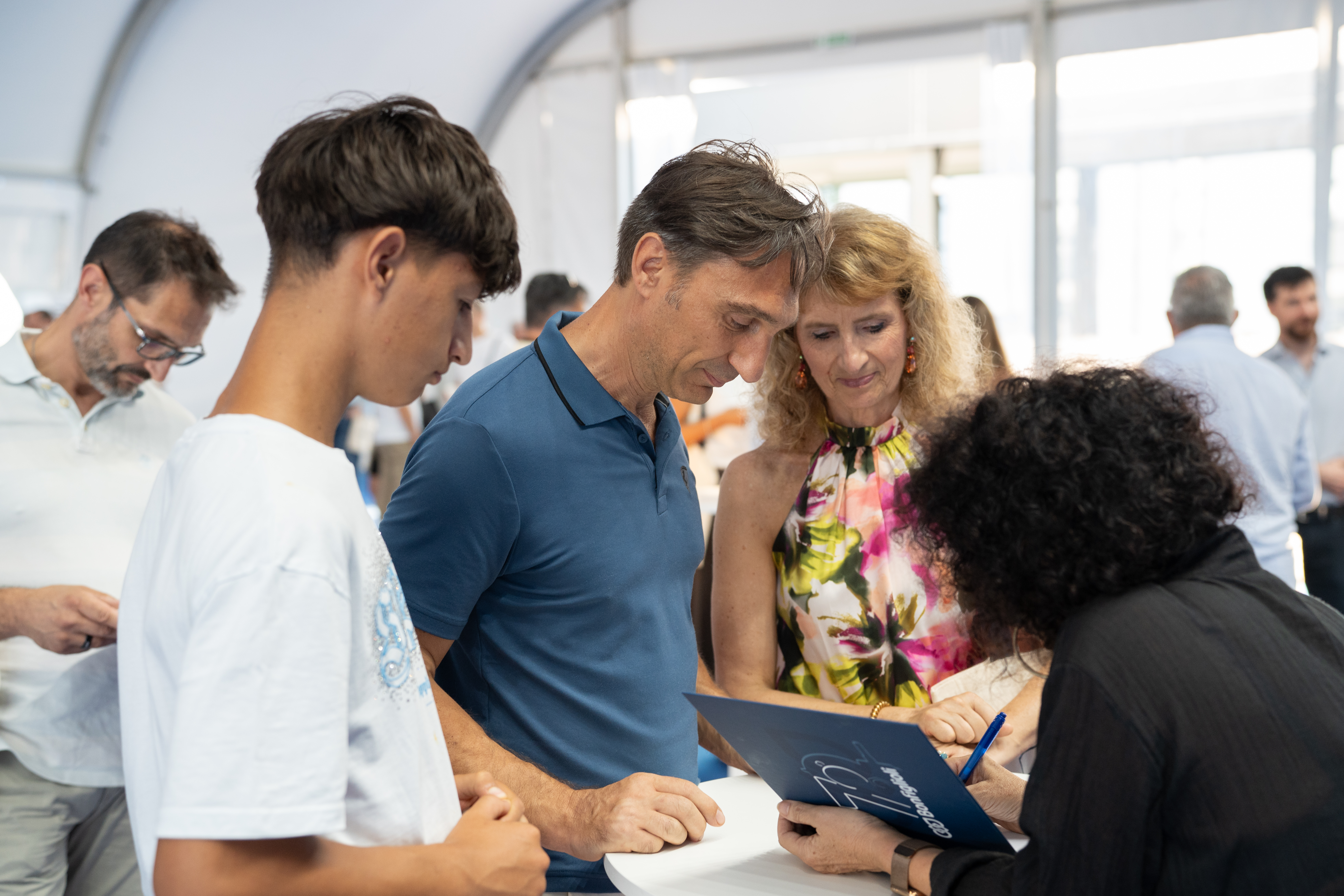
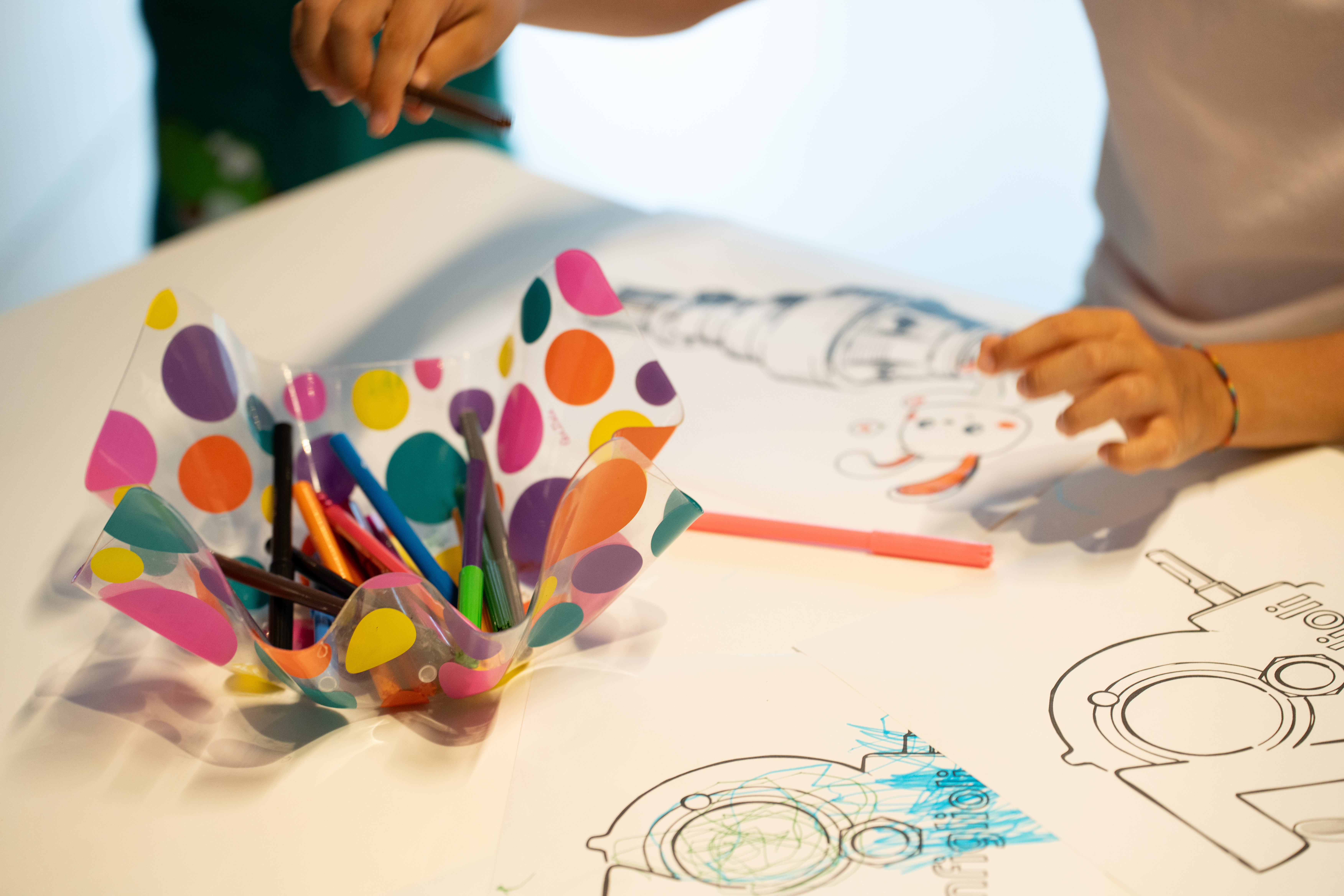
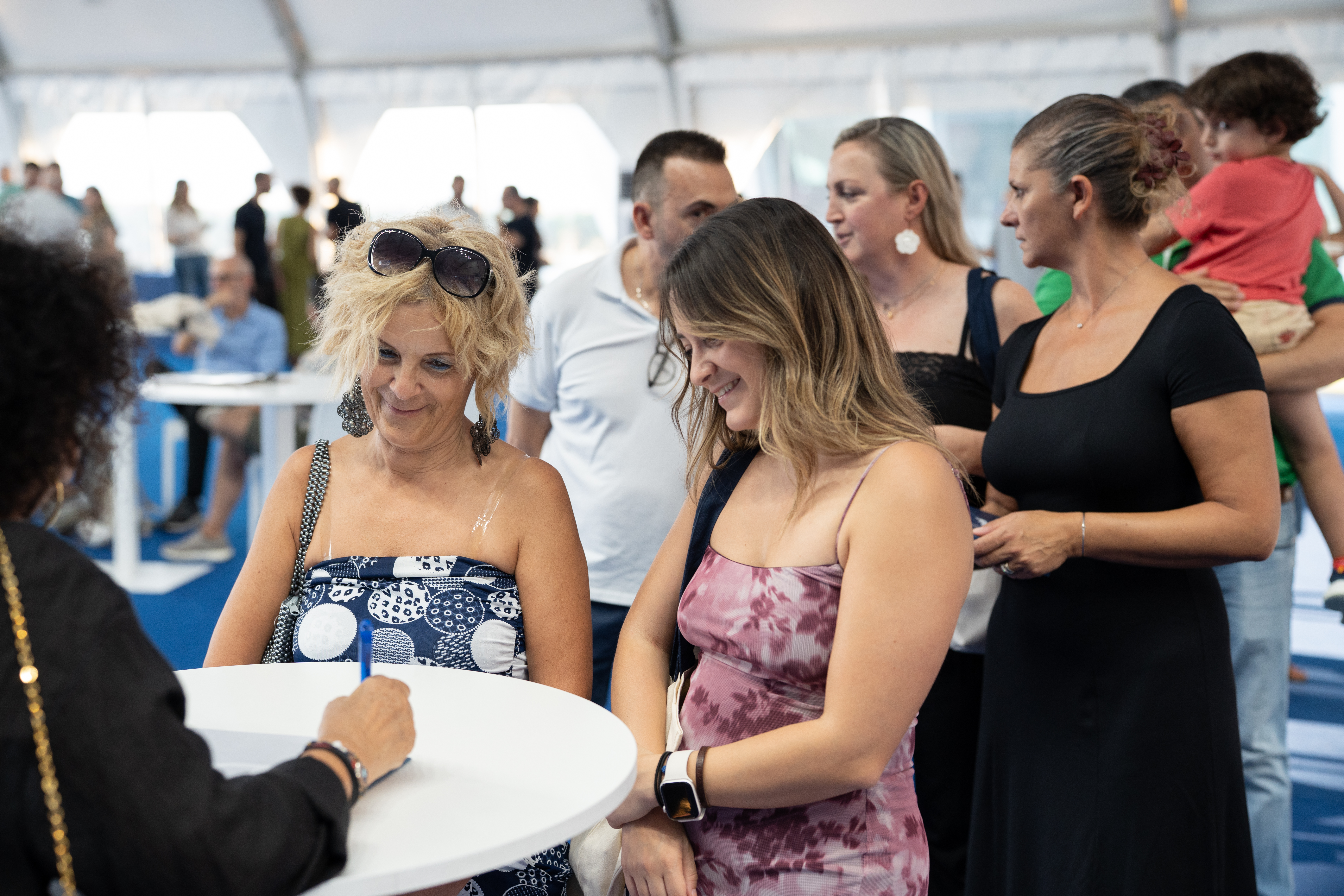
An afternoon of creativity and community

-
Manufacturing meets art: the Bonfiglioli Collection
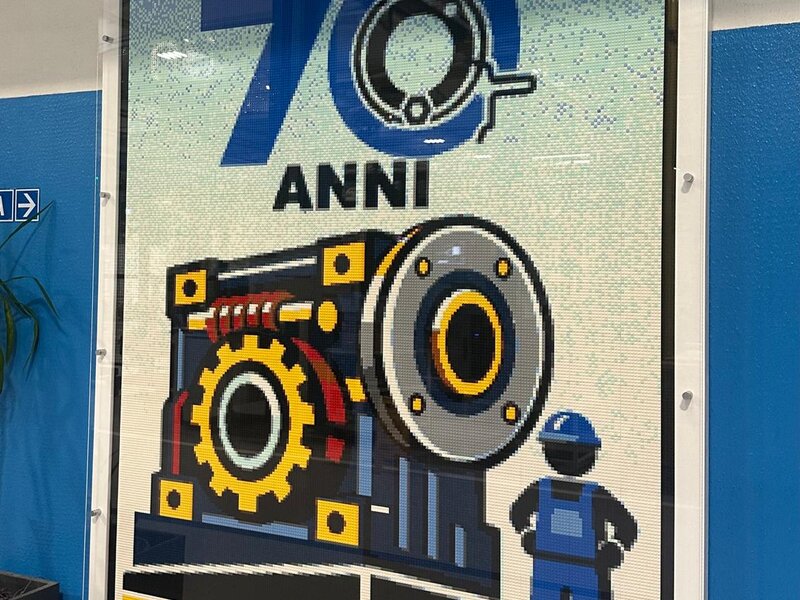
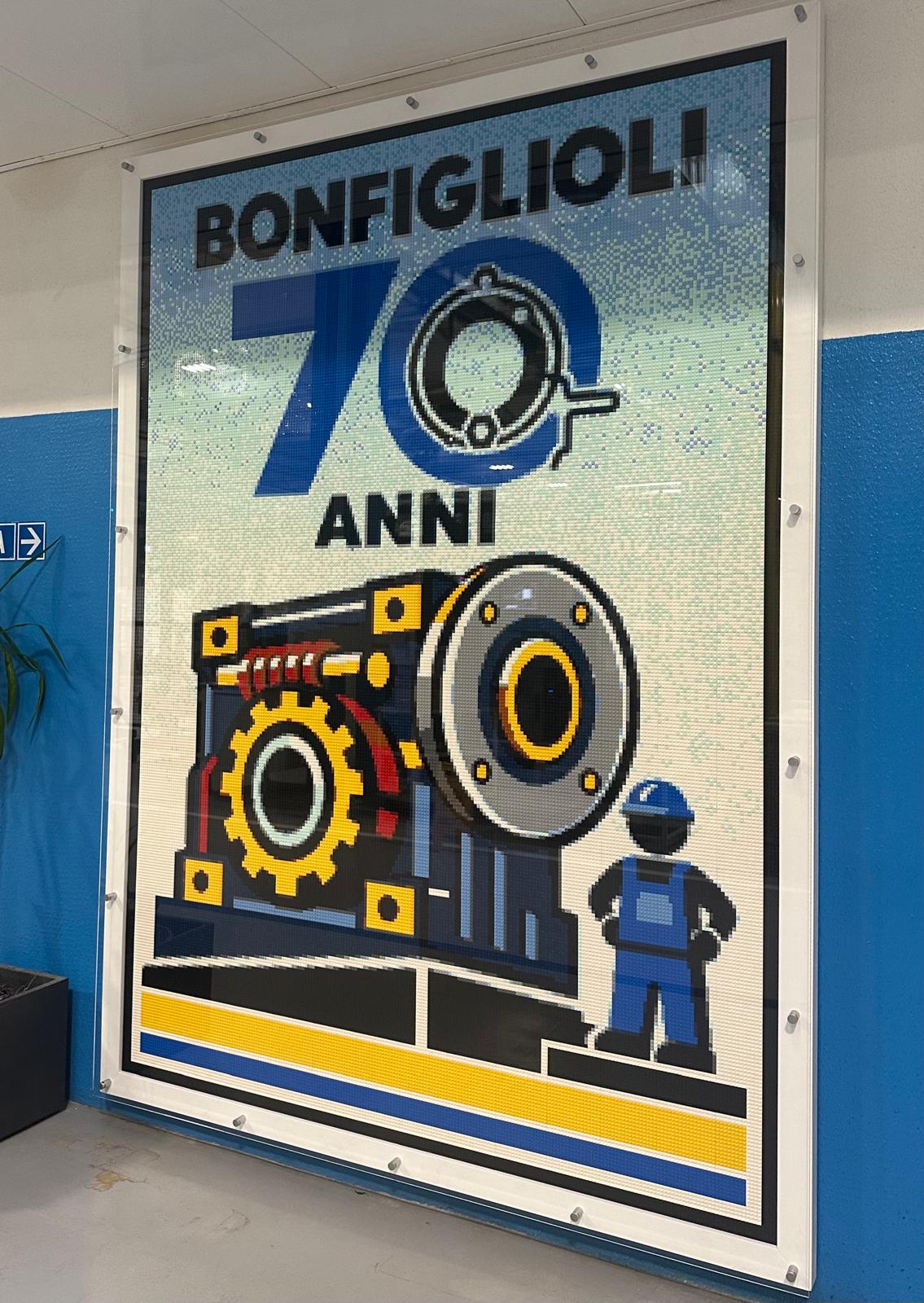
LEGO 70 - Alessandro Ferri DADO
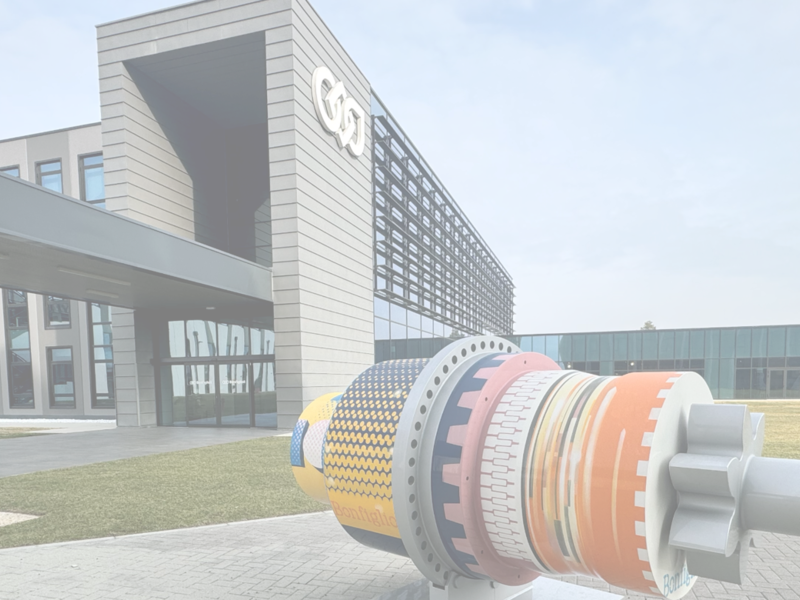
Riduttore POP - Alessandro Ferri DADO
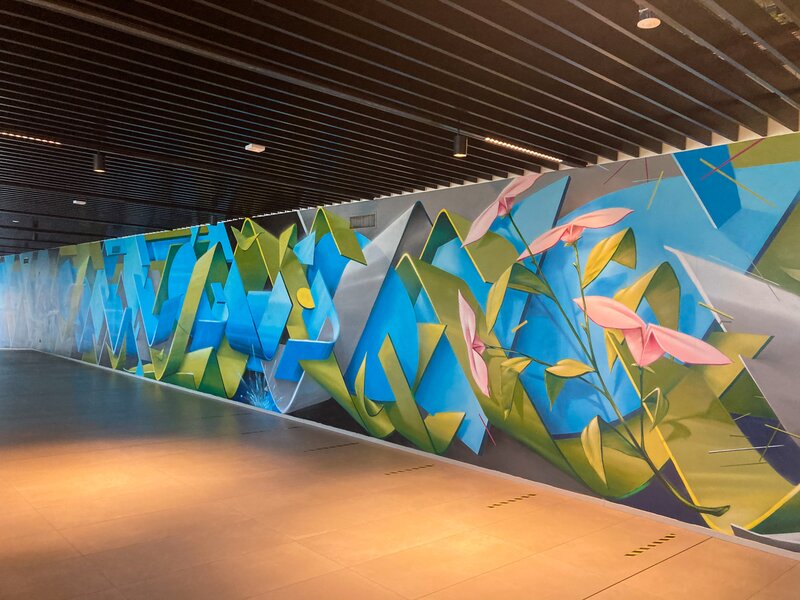
Bonfiglioli EVO Metamorfosi - Alessandro Ferri DADO
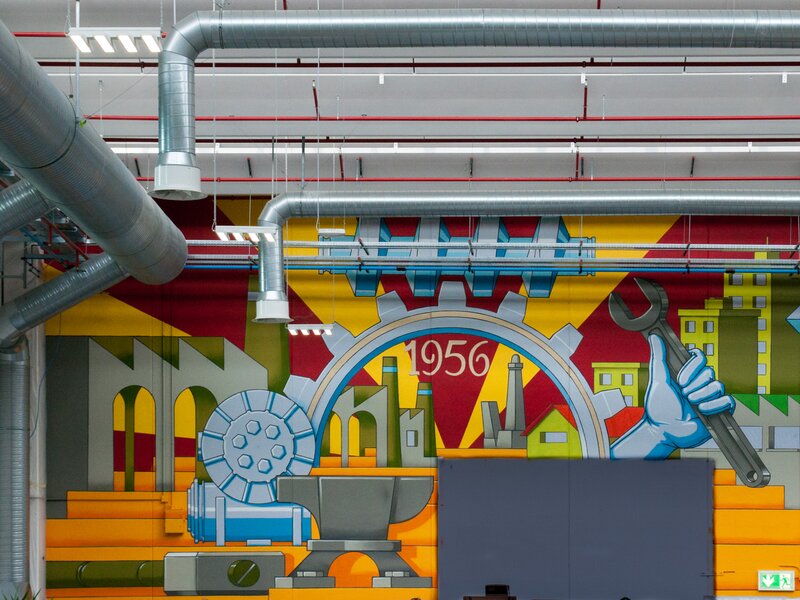
Bonfiglioli’s Manifesto Evolution - Alessandro Ferri DADO
Logo Filogenesi - Alessandro Ferri DADO
Bonfiglioli's Values - Alessandro Ferri DADO
Bandiere: from mural to design - Alessandro Ferri DADO
La stessa direzione - Valentina De Giorgi
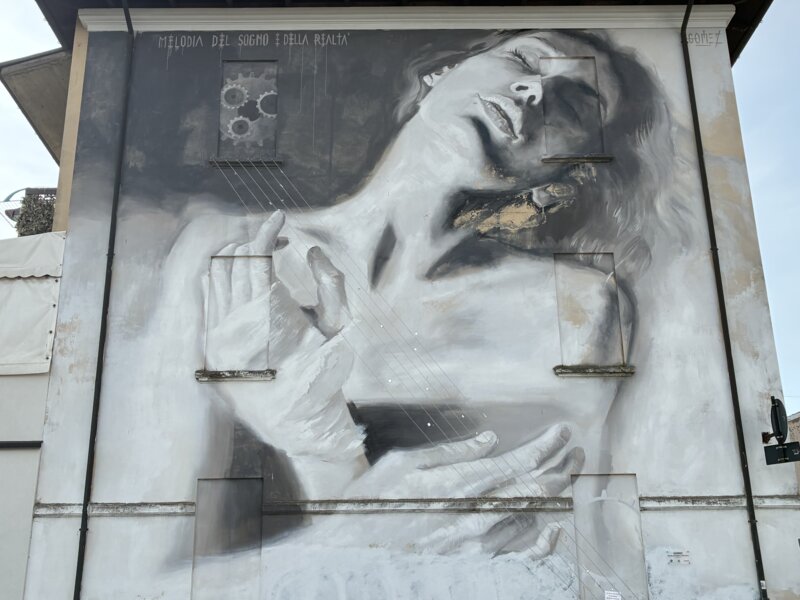
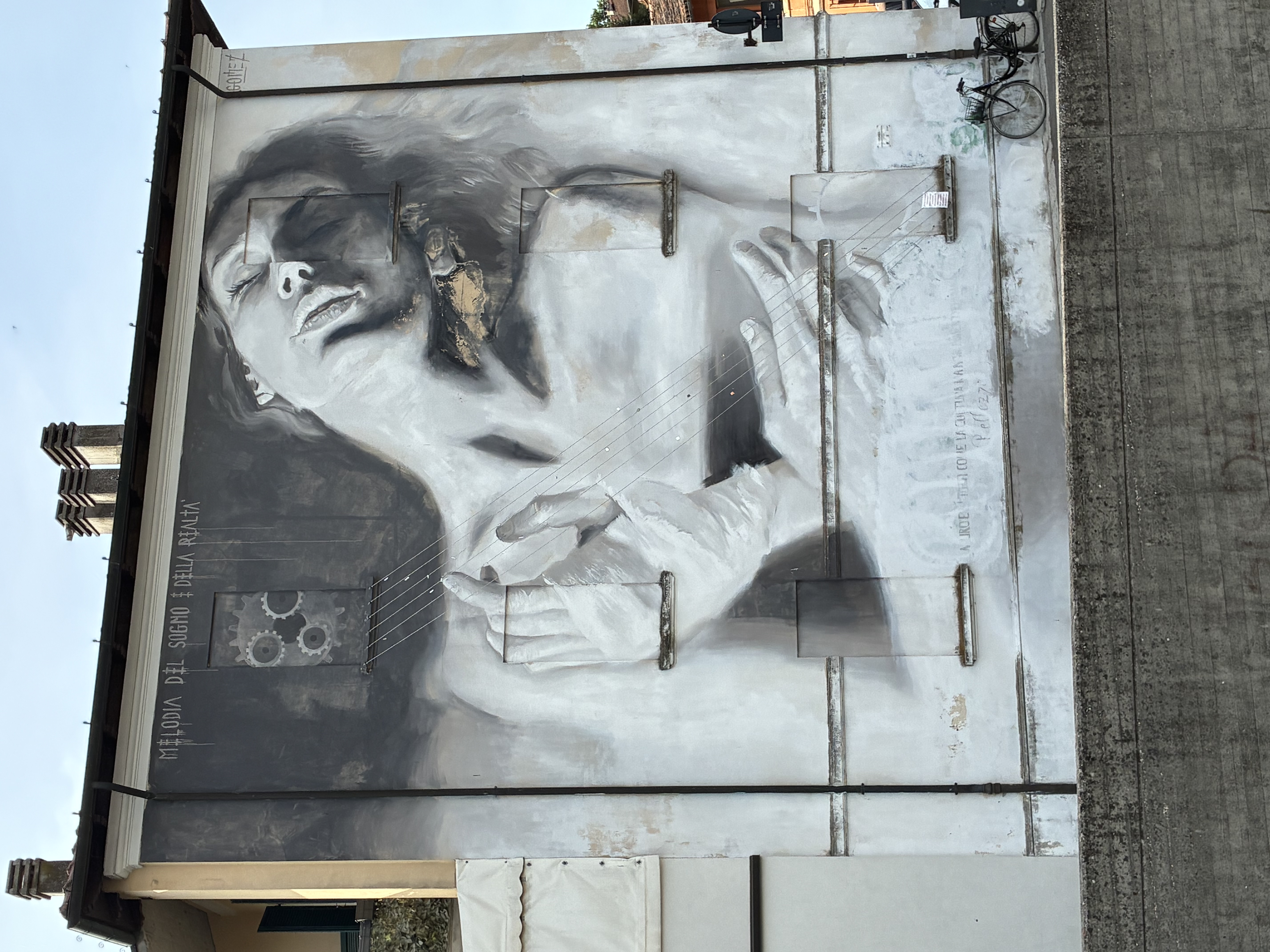
Melodia del sogno e della realtà - Gomez
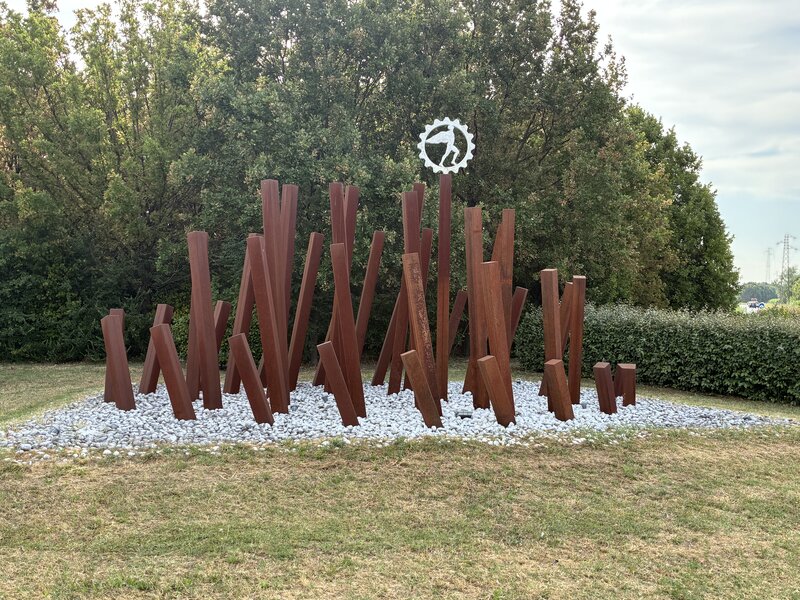
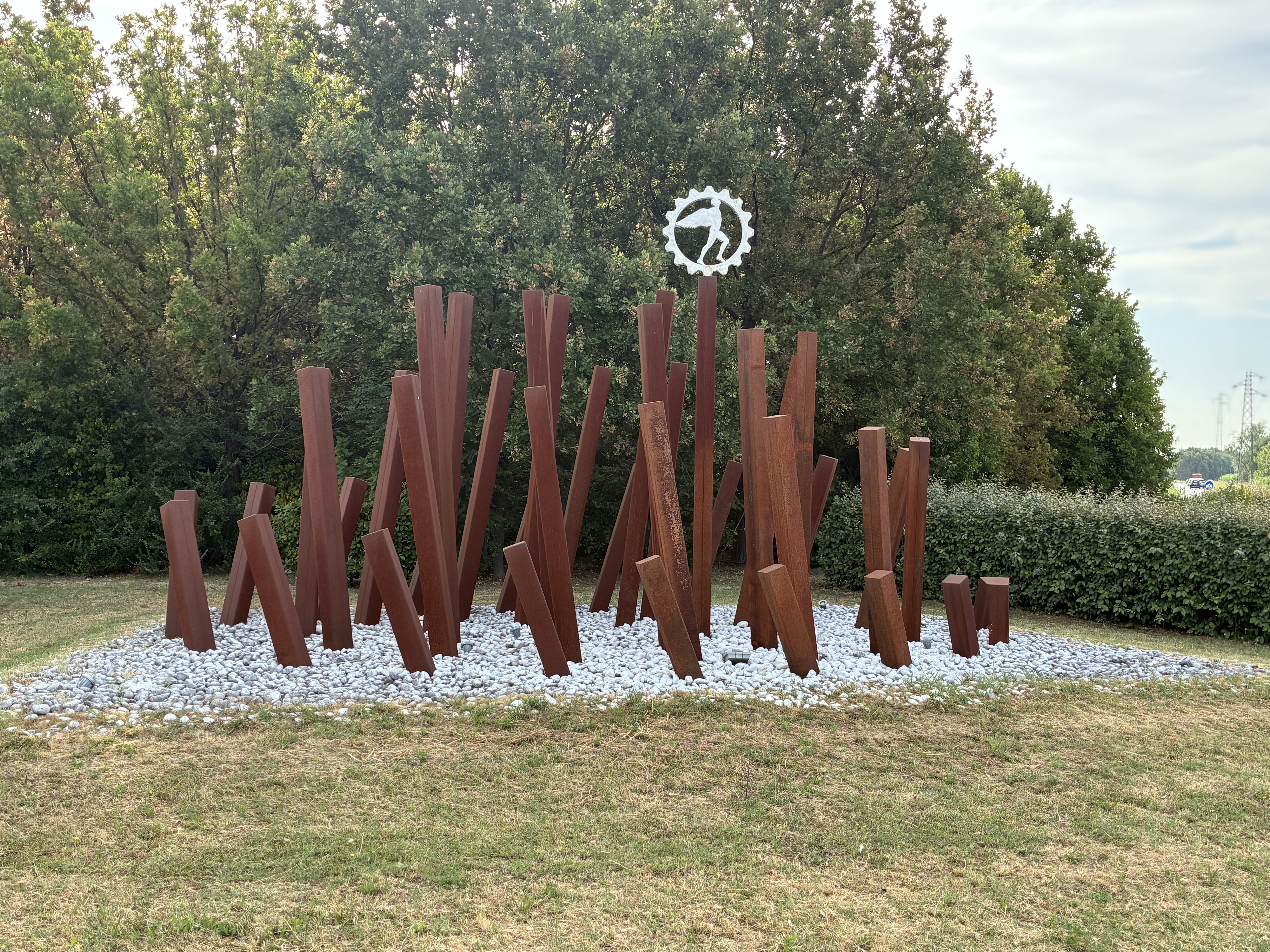
Icaro - Liceo Artistico e Musicale di Forlì
LEGO 70
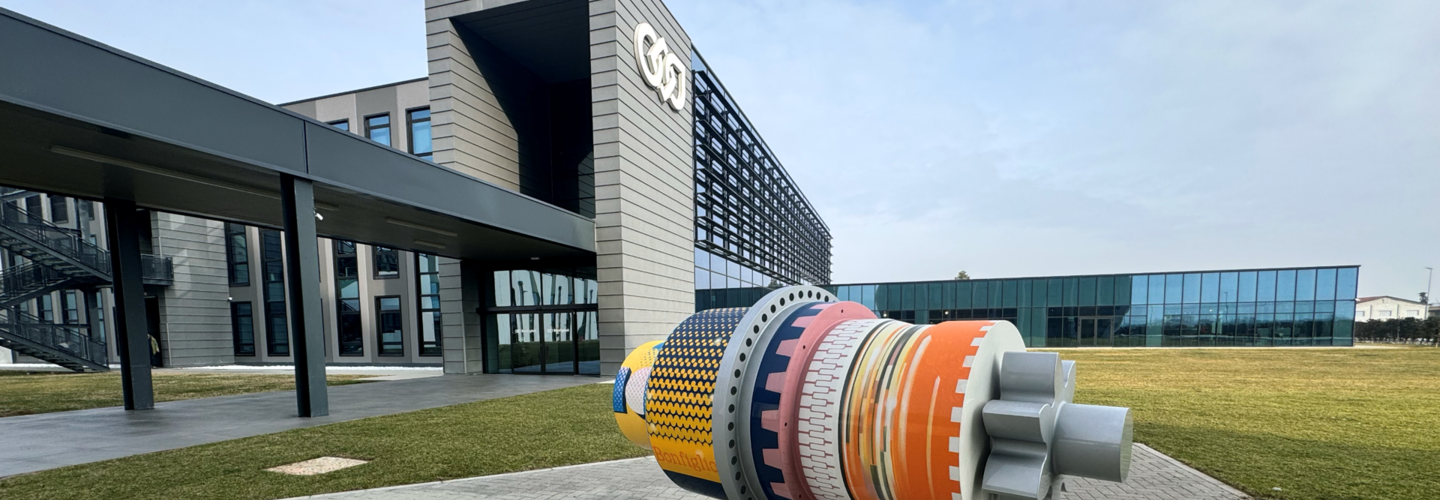
Riduttore POP
Author: Alessandro Ferri DADO
Year: 2023
Location: Bonfiglioli Headquarters, Calderara di RenoThe work represents a giant gearbox in bright, vibrant colors, with the aim of transforming a technical and functional element into a visually powerful piece of art.
Discover more about the artwork
The permanent installation Riduttore POP was created for Bonfiglioli Riduttori and was born from the observation of the company's industrial production, specifically the manufacturing of exceptionally sized gearboxes.
These components, designed for special machinery, reach extraordinary proportions, exceeding three meters in size. While maintaining their technical function, they transform into objects of strong visual impact, capable of altering the perception of scale and proportion.
It was precisely this characteristic that sparked a reflection on the aesthetic and conceptual potential of extreme magnification—a creative process typical of Pop Art that amplifies and transforms everyday objects into visual icons.
The idea of exhibiting the gearbox as a work of gigantism was immediately stimulating: the disproportion and magnification strip it of its purely functional identity, projecting it into a completely new artistic dimension.
I chose to work on its surface through a pictorial intervention, with the intent of detaching it from its original intended use and transforming it into a contemporary work of art. The shapes of the gearbox recall twentieth-century sculpture, creating a dialogue between industrial design and artistic research.
The process of metamorphosis of this object was the most fascinating aspect of the project: the gearbox, while retaining its grandeur, frees itself from the production context to become a dynamic sculpture—a work that connects form and function, past and future, engineering and art.
The final result is a permanent installation placed at the entrance of Bonfiglioli, where it welcomes visitors with a surprising and engaging presence, capable of sparking curiosity and inviting reflection on the transformation of industrial objects into contemporary artistic expressions.
Bonfiglioli EVO Metamorfosi
Author: Alessandro Ferri DADO
Year: 2021
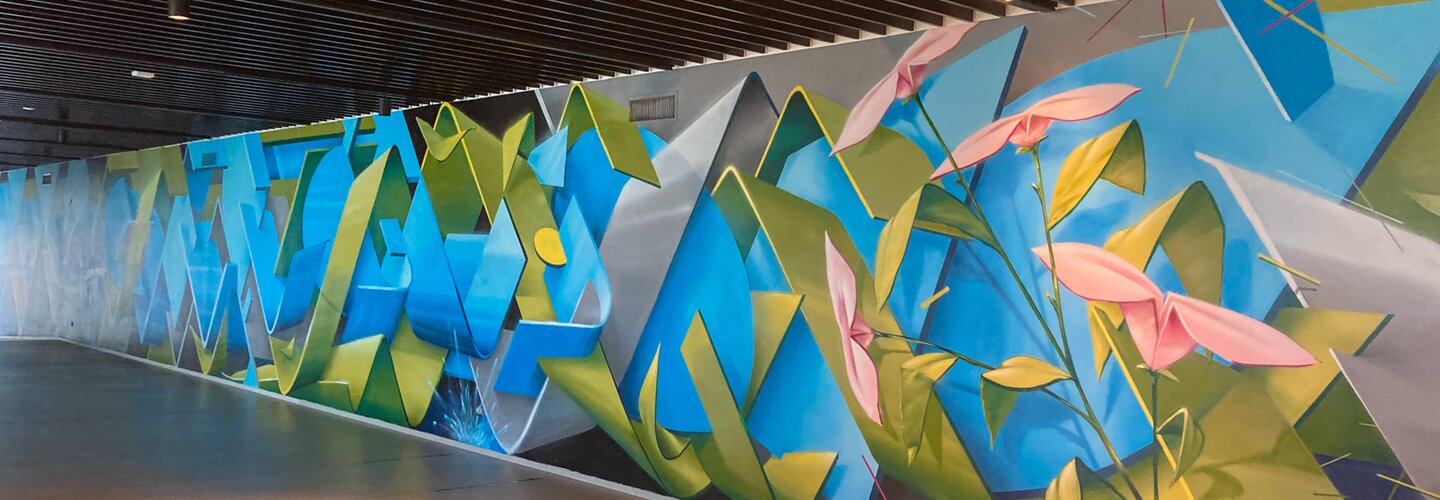
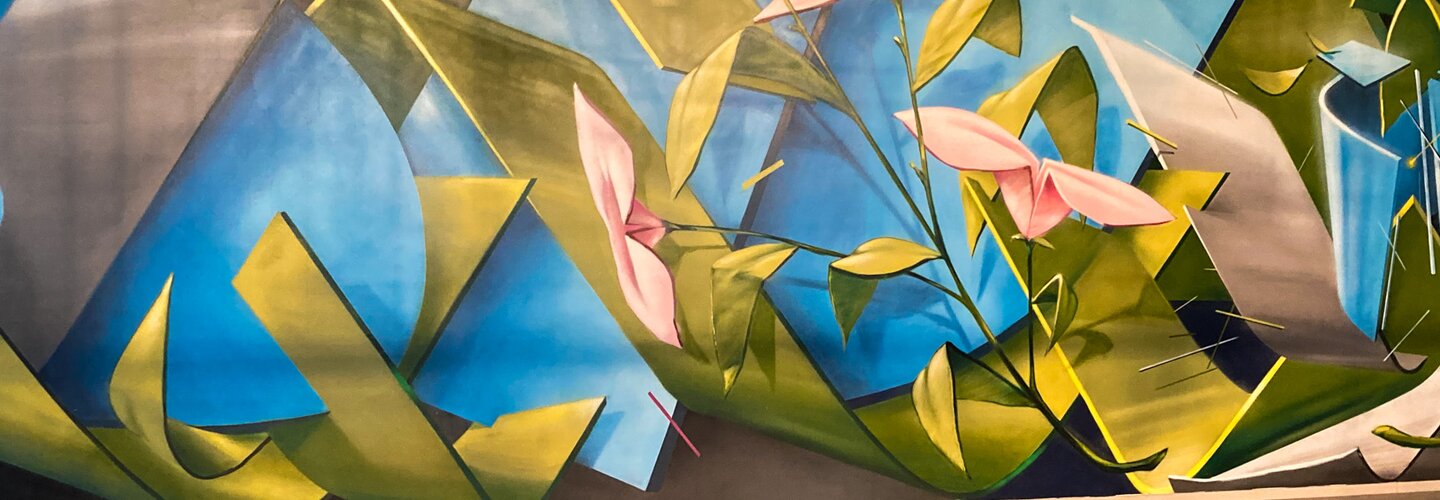
Location: Bonfiglioli Headquarters, Calderara di RenoThe Metamorfosi mural represents a visual narrative of the name Bonfiglioli, in which geometric graphic elements that "spell out" the company name intertwine and, through a metamorphosis, transform into natural floral elements.
Discover more about the artwork
In this project, the artist aimed to tell the story of the company and its production method, characterized by the intersection of mechanical precision and a strong creative capacity.
The location of the artwork plays a fundamental role: it develops along the entrance wall of the main plant and extends into the lounge area, a space dedicated to breaks and gatherings for employees and collaborators. Through this commission, the company chose to invest in the well-being of its people, enhancing the work environment through the dialogue between art and business.
The scale of the wall made it possible to develop a long frieze in which the concept of Metamorfosi takes shape: a process that leads from chaos to order and vice versa, in a relationship of mutual interdependence. The work can therefore be read in both directions, from left to right or from right to left, following a continuous flow of transformation.
The metamorfosi manifests through organic shapes that transform into geometric figures constructed according to an isometric perspective and, at the same time, geometric figures that evolve into natural elements, such as leaves, flowers, and water jets.
The organic shapes represent the more intuitive and creative dimension, recalling the company's ability to constantly direct itself toward research, innovation, and experimentation. The core of the transformation develops both through the lettering of the name "Bonfiglioli" and through the repetition of the company's distinctive graphic motif, consisting of the geometric shapes of the circle, the droplet, and the rhombus.
Metamorfosi thus aims to convey the character of a company in continuous evolution, capable of moving naturally between different fields: from research to design, and from mechanical precision to creative intuition. It is precisely this dynamism that has secured its international success, leading the company to stand out globally through the development of numerous patents.
Logo Filogenesi
Author: Alessandro Ferri DADO
Year: 2024
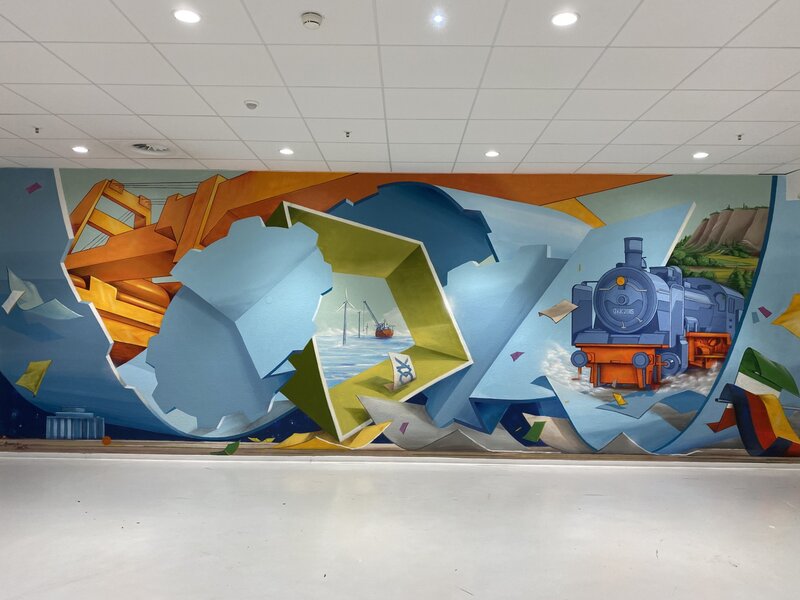
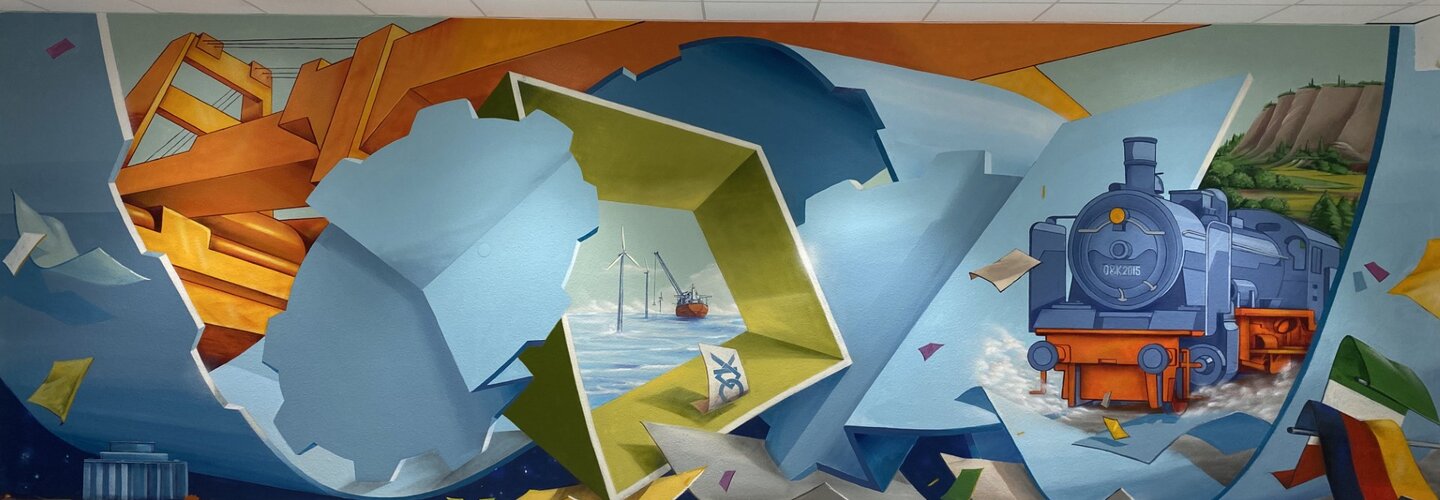
Location: Hattingen, GermanyThis mural depicts the transformation of the Bonfiglioli logo into a work of art that evokes the identity, history, and evolution of the German plant.
Discover more about the artwork
The artwork created at the German Bonfiglioli plant was born from a specific request by the German branch, with the aim of telling the history and journey of the company from its foundation to the present day, embedding small details rich in meaning within the composition.
The subject of the work is a three-dimensional reinterpretation of the Bonfiglioli Riduttori logo. Its component elements—the circle, the rhombus, and the droplet—are transformed into a dynamic, harmonious composition full of movement.
The circle takes shape through a chain and a gear; the rhombus transforms into a window open to the future, while the droplet becomes a symbol of the dialogue between past and present: on one side, a train, which recalls the memory of the historic steel mills, and on the other, a vision inspired by natural elements, expressing a new design sensitivity.
On the left side of the artwork, a large mechanical detail represents the extraction of resources from the earth, evoking the origins of the material and the bond between industry, technology, and the local territory.
The composition develops as a succession of images and visual fragments that build an open narrative, devoid of a linear storyline, yet capable of suggesting connections, memories, and perspectives.
The presence of the Italian and German flags underlines the strong bond between the two countries and bears witness to the continuity of values that Bonfiglioli carries forward in its international growth.
The artwork was placed within the company's exhibition space and meeting room with the intent of enhancing the work environments, enriching them through the language of art, and helping to create a space capable of inspiring, welcoming, and representing the company's identity.
Bonfiglioli's Values
Author: Alessandro Ferri DADO
Year: 2024
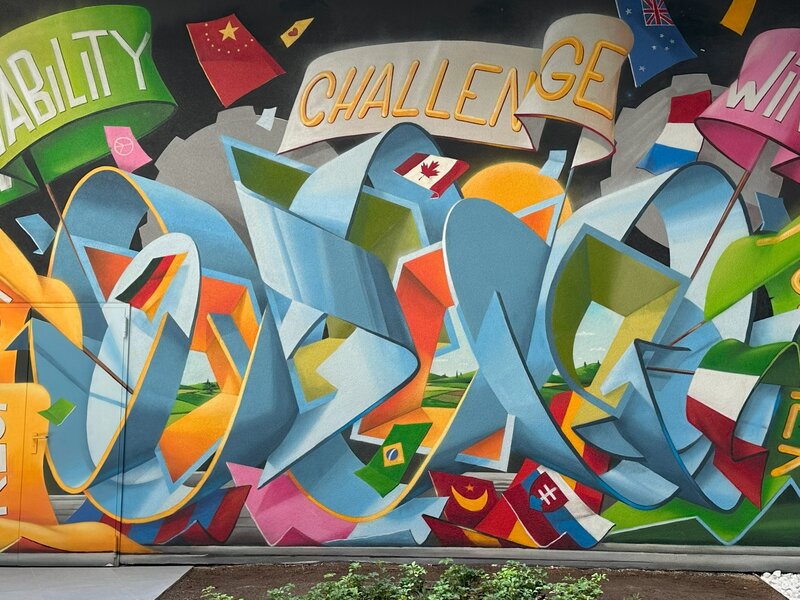
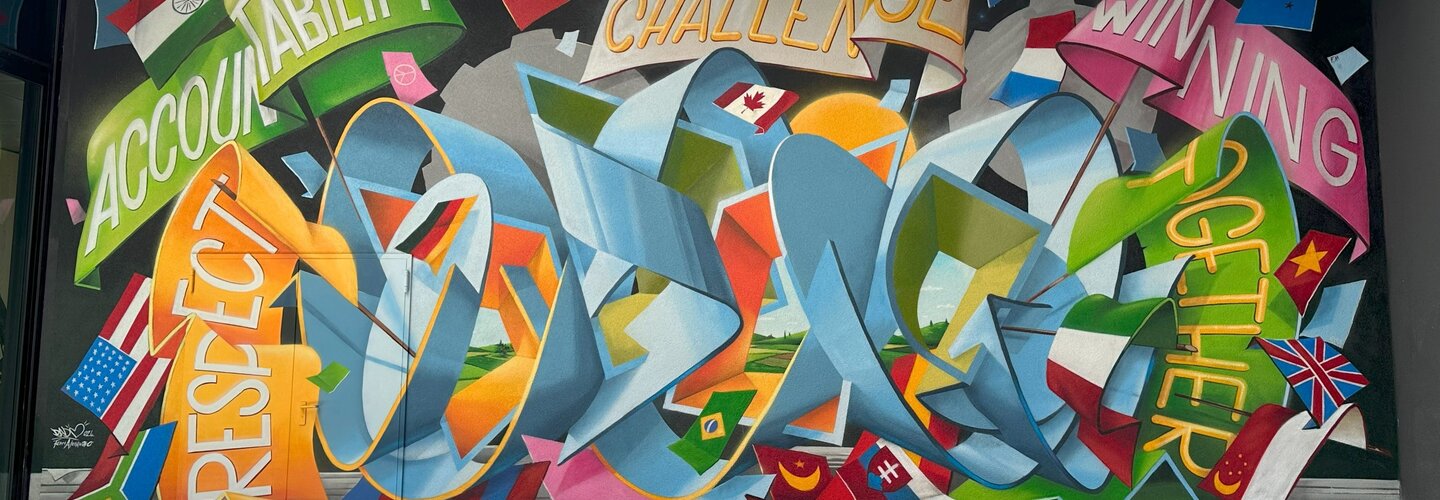
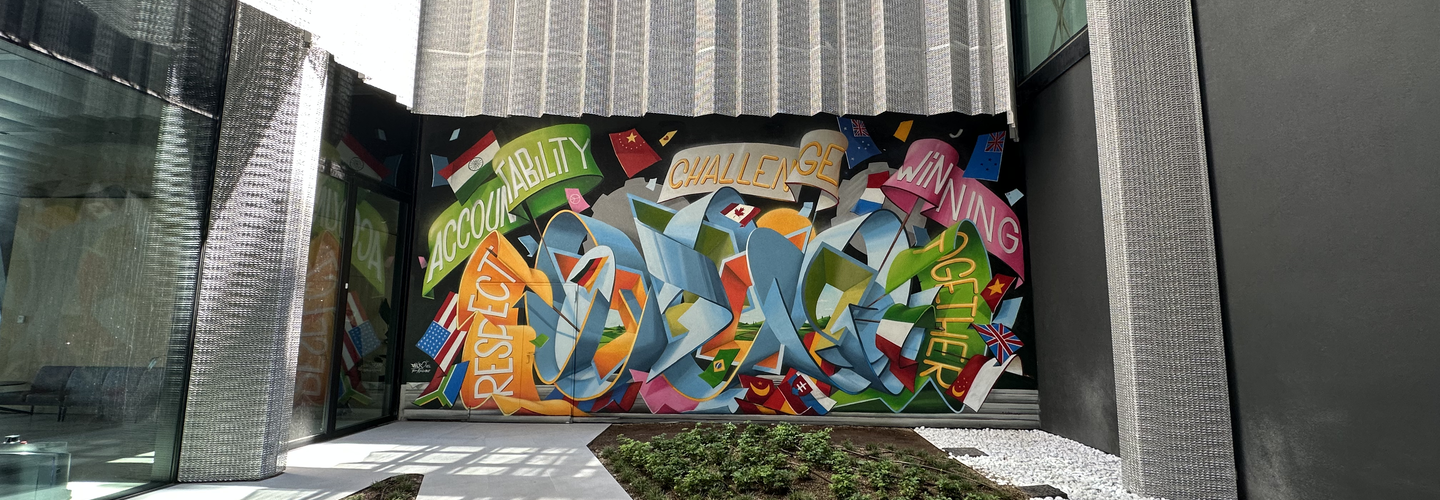
Location: Bonfiglioli Headquarters, Calderara di RenoMural created in the headquarters' garden with the aim of celebrating and visualizing the company's core values, highlighting concepts such as innovation, sustainability, precision, and collaboration.
Discover more about the artwork
The mural created at the Calderara di Reno headquarters is an artistic interpretation inspired by Bonfiglioli and the values that unite and connect all its branches worldwide.
The artwork offers a reinterpretation of the company logo through the three-dimensional language that characterizes Alessandro Ferri’s artistic research, creating a dynamic composition of shapes in continuous motion.
The mural incorporates the flags of all the countries where Bonfiglioli operates. Some of these are deliberately left white and monochrome, symbolizing the company's future development and international expansion.
The composition unfolds through abstract shapes from which the distinctive marks of the Bonfiglioli Riduttori identity emerge—the droplet, the rhombus, and the circle—immersed in an interplay of colors, fragments, and surfaces evoking flags and sheets of paper fluttering in the wind.
At the center of the artwork, four large flags display the company's core values, arranged in a circle around the main symbol to emphasize their central role in Bonfiglioli's culture and identity.
The mural is an explosion of bright colors, a visual celebration capable of breaking up the monotony of the architectural space and restoring energy, vitality, and harmony to it, establishing a direct dialogue with the building that hosts it.
The artistic intervention is not limited to a decorative function but functions as a genuine meeting place at the foot of the building. The work integrates with the open space, the small garden, and the area intended for transit and rest, transforming this location into a square dedicated to communication, dialogue, and sharing.
The goal is to create a space capable of fostering connections between people, ideas, and values, where art becomes a tool for dialogue and belonging—a contemporary language that weaves together references to street art with the concepts of community, collaboration, and collective growth.
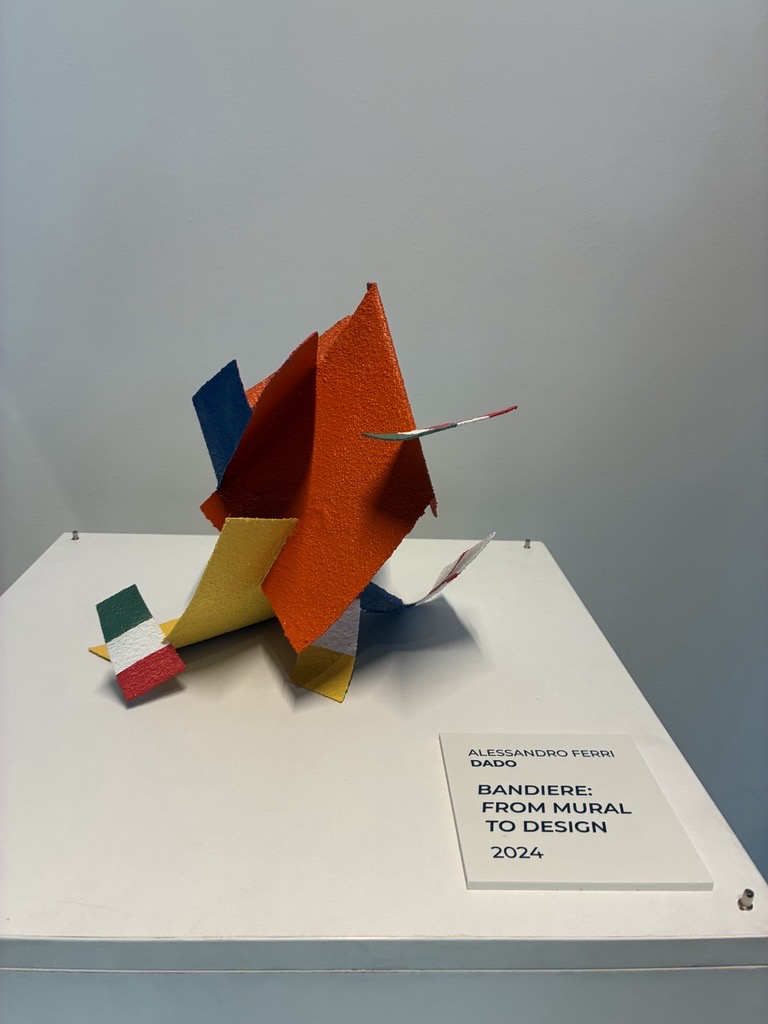
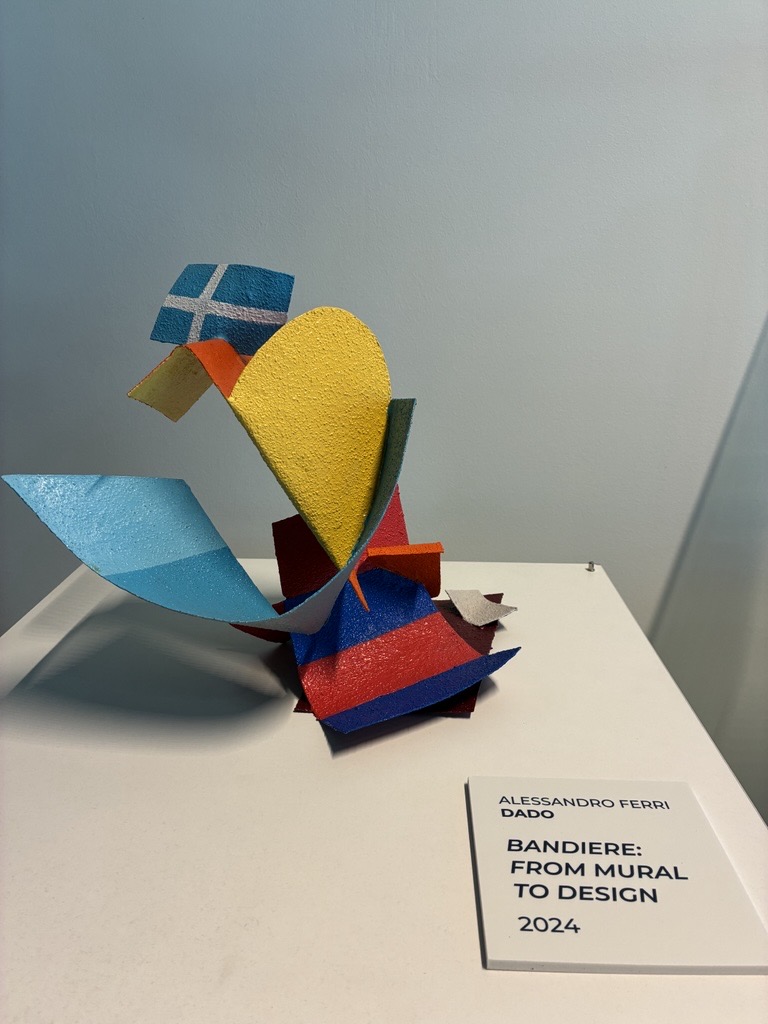
Bandiere: from mural to design
Discover more about the artwork
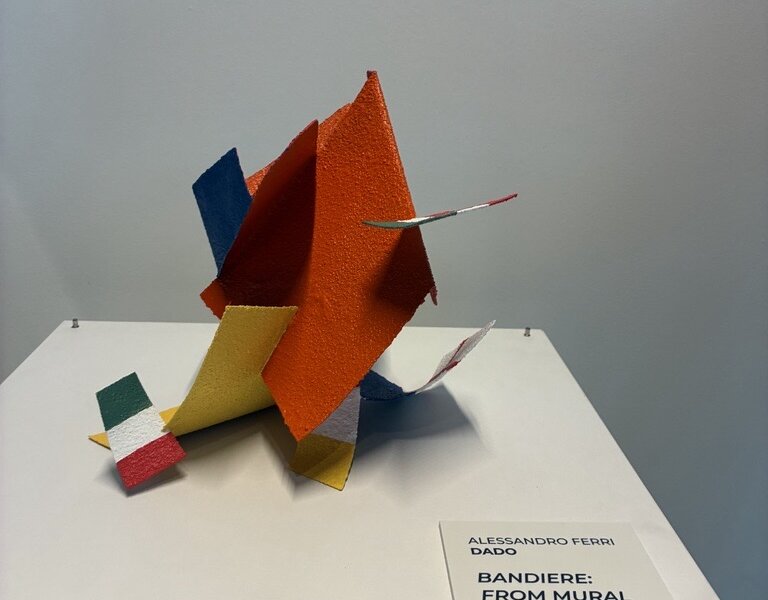
The project originates from the desire to give new life to those elements, transforming them into three-dimensional objects capable of expressing the dynamism and values that distinguish the company.
The shapes of the sculptures recall those of the mural, reinterpreting the dynamic movement of the gearbox and integrating the dominant motif of the flags, which seem to wrap and float around these idealized structures.
Moving from this same inspiration, Ferri has created two sculptures that develop and make tangible the three-dimensional vision already suggested by the pictorial intervention. The intent was to transform a two-dimensional image into a concrete object, translating the artistic concept into a work of contemporary design.
Through a careful process of synthesis and reinterpretation, the artist has transferred the volumes, tensions, and compositional dynamism of the mural into two sculptures that become authentic design objects—works that are lightweight yet dynamic, capable of conveying a constant sensation of movement and fluidity.
The sculptures thus make it possible to experience the essence of the mural in a new, three-dimensional form, projecting its language beyond the architectural context for which it was conceived and making it usable as an independent work, suspended between contemporary art, design, and industrial identity.
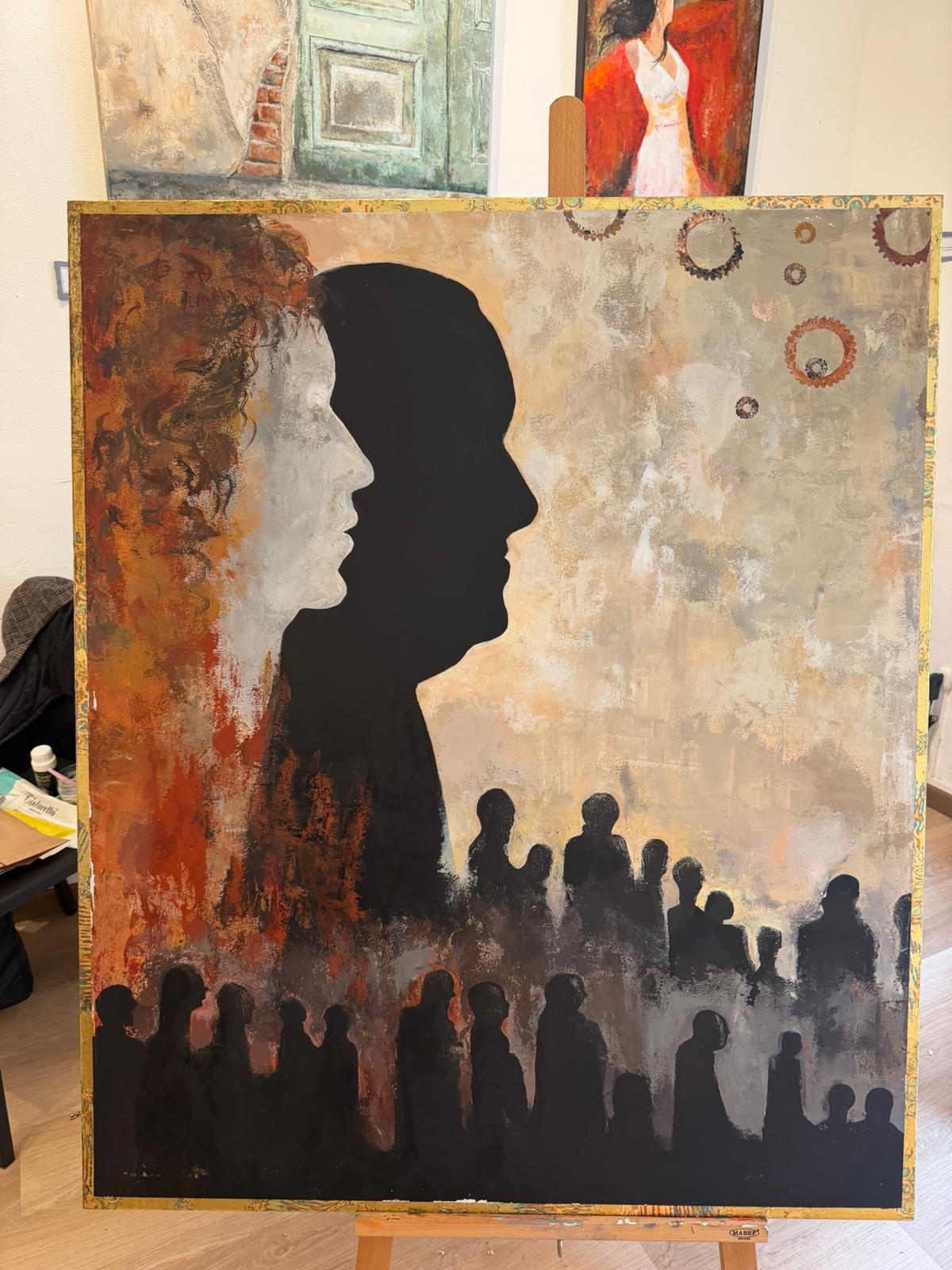
La stessa direzione
Discover more about the artwork
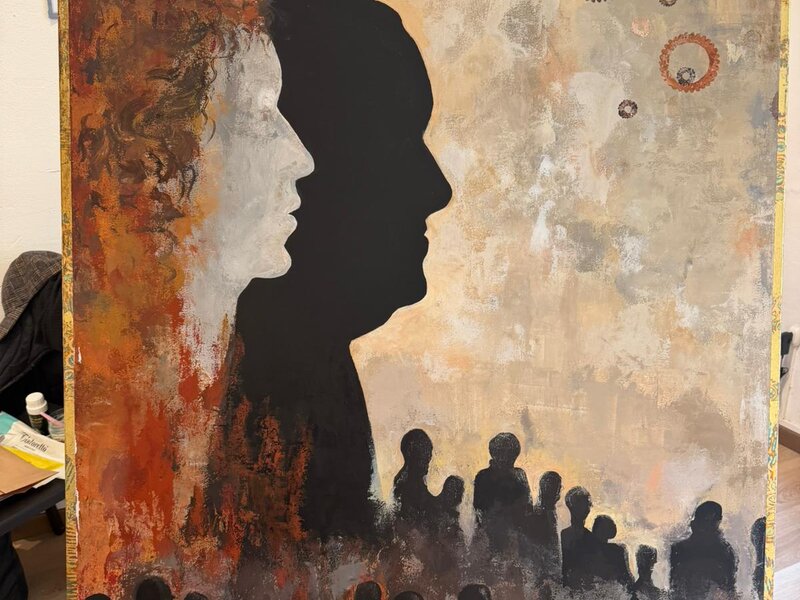
The artist transitioned from ceramics to canvas, where acrylics became her natural language, moving between brush and palette knife.
She paints guided by emotion: bright, vibrant colors alternate with soft, pastel shades.
Her goal is to transform art into a voice and color into action, sowing questions where silence reigns.
She does not limit herself to observing the world, but invites it to transform.
Melodia del sogno e della realtà
Discover more about the artwork
Street artist Gomez painted an extraordinary ten-meter wall artwork in Piazzale Guido da Montefeltro for the first major event of "#ForlìAmoStreetArt – from decay to decorum."The artistic intervention aims to enhance urban heritage through a contemporary lens.
This event is part of the broader "#ForlìAmo" project, which the Municipal Administration promoted back in 2015 with the "#ForlìAmo-Cerca il Muro" (Find the Wall) initiative. This initiative directly involved citizens in identifying graffiti and writing to be removed, ultimately leading to an educational meeting between students and industry professionals.
The artwork was made possible thanks to the contribution of the company Bonfiglioli Riduttori, which fully sponsored the project.
Gomez was born in 1980 in Caracas, Venezuela, and has lived in Berlin, London, and Rome, where he currently resides. His journey in street art began at a very young age with self-taught experiments on canvas, eventually leading to large-scale murals that draw inspiration from classical mythology and history.
Icaro
Discover more about the artwork
It is 2015 when the Municipality of Forlì opens a tender to allow private companies to take management of some of the city's roundabouts that are in a state of semi-neglect.
Bonfiglioli applies to "adopt" the roundabout in front of the Forlì plant, and from here begins the history of the Clementino Bonfiglioli Roundabout, which, after a long study and a complex project, is restored and embellished with a lawn, plants, and Icarus—the statue that welcomes those who visit Bonfiglioli.
Icaro was born from an idea of the students from the Liceo Artistico e Musicale of Forlì who, in November 2015, were invited to the Bonfiglioli plant to see the production world firsthand and draw inspiration for the artwork proposals to be submitted to an internal competition, with the winning piece destined to be placed on the roundabout.
The visit to the plant yielded excellent results, visible in the scale models presented by the students a few months later.
An internal commission, supervised by Sonia Bonfiglioli, decided that the project dedicated to Icarus was the one to be brought to life. Indeed, it is an installation rich in meaning: the 41 pillars symbolize the years the plant had achieved in 2016, the year the roundabout was inaugurated in the presence of the Mayor and key local authorities. The chosen material, Corten steel, has an industrial feel; the statue of Icaro, symbol of the city of Forlì, is positioned inside a steel gear ring, once again recalling the strong bond connecting Bonfiglioli to Forlì—the factory to the city. This demonstrates how strongly Bonfiglioli believes in social responsibility toward the local territory that hosts one of its largest production plants in the world.
To seal this fruitful local collaboration, the roundabout was officially named after Clementino Bonfiglioli at the end of 2020.
-
Coming soon


